

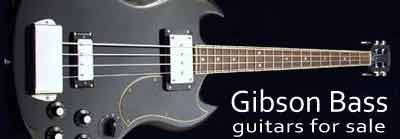
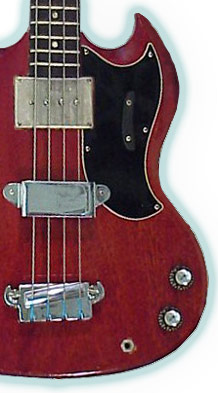
The Gibson EB0 is a true design classic. From its launch in 1959 to its demise 20 years later, it remained Gibson's most popular bass, making up almost a third of all solid body bass sales
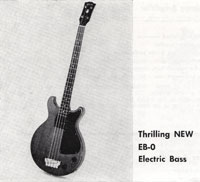
The Gibson EB-0 (usually pronounced, and sometimes written EBO) was first produced in early 1959, being shown at the Summer music trade fairs of that year priced at $180. It was announced to dealers in advance in the May/June issue of Gibson Gazette; Thrilling new EB-0 electric bass. The EB-0 basses produced from this time, and up until 1961, all had the doublecutaway Les Paul Junior body style. From summer 1961 the better known SG body style was used, and proved considerably more popular.
But the vast majority of Gibson EB0 guitars were shipped in the 1960s - the peak year with 3018 is 1969 (see a typical '69 EB0), when Cream style blues rock was at its height (Jack Bruce, the bass player with Cream is famous for his EB3 bass playing). Interestingly enough, few major artists seemed to have used the EB0; the EB3 had a greater tonal range, and money is not an issue for 'rock stars', but it was popular with the garage, blues, soul and church bands of the 1960s and 70s. Notable early users include David Knights of Procol Harum, Jermaine Jackson of the Jackson Five, Billy Kinsley of the Merseybeats, Dave Ambrose of the Brian Auger Trinity, and Dennis Dunaway of the Alice Cooper group. The price difference between the two was not massive; in 1970 the EB0 was $350 compared to $410 for the EB3.
Have a closer look (and listen) to some of these EB0 basses:
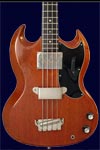
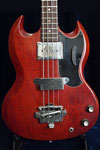
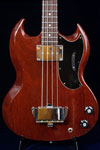
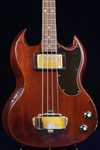
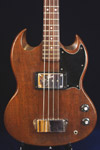
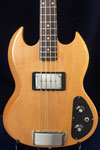

I bought my EBO new.. I loved the shape of it and, switching from an Airline, I liked the shorter scale neck. I played it through an Acoustic 360, which seemed to be the biggest bottom most road durable amp of it's day - Dennis Dunaway, Alice Cooper
The Gibson EB-0 vs the Gibson EB-3
The difference between the EBO and the EB3 was the extra pickup (and associated electronics) in the bridge position on the EB3. Both used the same materials, mahogany bodies and necks (maple necked from 1972) with rosewood (and occasionally ebony) fingerboards. During much of the production run, the EB0 had a 3-ply pickguard (b-w-b) whilst the EB3s had 5-ply (b-w-b-w-b).
Production of all Gibson EB-0 bass guitars was at the main Gibson plant in Kalamazoo, Michigan.
EB-0 strengths
Short scale, mahogany throughout and the unique Gibson EB humbucker made for a quick playing bass with a heavy heavy sound. Obviously popular with the burgeoning rock movement of the late sixties, but also a great bass for jazz, R&B, and reggae - a true design classic that still looks as fresh as it did in '61.
EB-0 weaknesses
Sixties EBOs (sixties Gibsons in general) were prone to breaks in the headstock, around the body-neck join and also around the input jack. The back slanting headstock is unfortunate; if a guitar falls backwards, it's headstock generally hits the ground first. Mahogany can be brittle too, and such a fall can easily crack or even break the guitar. The short scale was also seen as a weakness by some, and so a long scale version was also available from 1970.The EB0 is renowned for its deep sound. Melting butter. Or mud. Depending on your point of view. Very popular in the 1960s, but by the turn of the decade, tastes had changed. To brighten the sound (and maybe to strengthen the instrument) Gibson introduced long scale (34.5") models which did not sell overly well, and from 1972 laminated maple necks. Furthermore the pickup was repositioned, away from the neck. It was to no avail, though, as by 1974 other Gibson basses such as the Ripper (and in 1975 the Grabber) had appeared and sales of SG style basses plummeted.
Gibson EB-0 sound clips
DI'd EB0 - no amplifier
I generally use flatwound strings on my EB basses, typically Thomastik Infeld Jazz Flats (JF324) or LaBella Deep Talkin' (760FSS); both enhance the fatness of the EB0 humbucker, or for a lighter gauge string, Rotosound RS77S.
1964 EB0 (round wound strings, treble and vol pots positioned at 9/10, recorded directly into my sound card, with no pre-amp)
1970 slotted headstock EB0. Wow, what a tone!
EB-0 through vintage amps
Through three 15" tube bass amplifiers: the studio standard of the last half century, the Ampeg B15, an early 1970s British amp, the WEM Dominator bass, and Gibsons own mid 1960s bass amp, that would have been sold alongside the EB-0, the Gibson Atlas IV
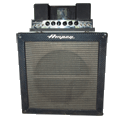
1966 Gibson EB-0 through a 1964 Ampeg B-15N
The B15 is the studio amp, and there are a lot of great tones to be had with an EB0
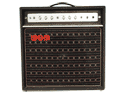
1966 Gibson EB-0 through a 1973 WEM Dominator Bass Mk 1
This little British WEM amp has a 15" Celestion Greenback G15M - and it breaks up nicely, producing a superb snarly rumble
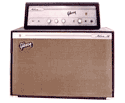
1966 Gibson EB-0 through a 1964 Gibson Atlas IV
The Atlas can be pretty clean, and then turn gritty as you dig in - you can hear plenty of snarl towards the end of this clip
Gibson EB-0 Chronology
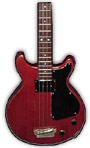
1959
The EB0 was launched in 1959, with the Les Paul Special body shape of the time, and the translucent Cherry finish. It was only shipped in small numbers, and today is highly collectable. Have a look at the original publicity from the May/June 1959 issue of Gibson Gazette which announces the new model.
1960
The first catalogue appearance of the EB-0 (and the only time shown with the Les paul junior style body) was in the 1960 Gibson catalog
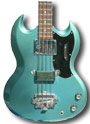
1961
In late 1961 the more familiar 'SG' style body was introduced (see the announcement from the Summer 1961 issue of Gibson Gazette), and remained largely unchanged for the best part of 6 years. It was available in Cherry, or custom colours such as this one in Pelham blue.
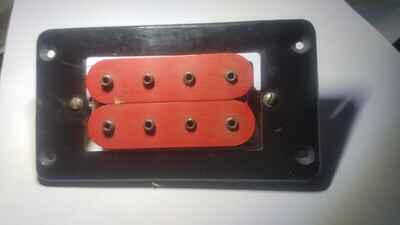
Earlier SG-style EB-0 features include a black bakelite humbucker cover, raised (not centered) crown headstock inlay and a wider neck profile (width at nut, 1 3/4"). Have a closer look at a 1962 Gibson EB-0.
As the sixties progressed subtle changes were made, nickel replaced plastic as the pickup cover, though the pickup below remained unchanged, and the necks were made slightly thinner. The under bridge mute, initially optional, was fitted as standard from June 1965. Have a closer look at a 1966 Gibson EB-0.
1967
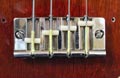
From late '67 the infamous 2 point tune-o-matic bridge, with chrome plated bridge cover was used on all EB bass models, and the handrest was discontinued. This was the first time all four strings could be intonated separately. A few intermediate instruments did have the new intonatable bridge combined with the centrally positioned handrest.
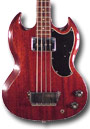
1969
As the decade came to a close, Gibson started experimenting with laminate necks - the basses were no exception, and the traditional one-piece mahogany neck was replaced by a three-piece version, otherwise identical. Check out a 1969 EB-0.
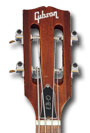
1970
By the very end of '69 split headstock EB0s were being produced. They were similar in most other respects to earlier models, save for the slots in the headstock, and backward facing banjo-style tuning keys. The pickup did now have a black plastic mount, and was finally height adjustable. Have a closer look at a 1970 Split headstock model.
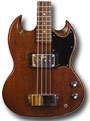
The 1972 EB0 saw a major remodelling; a new pickup design - positioned further away from the neck, solid headstock, laminated maple neck with volute, thicker, weightier body, and new pickguard. Check out a 1972 EB-0.
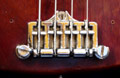
Gibson started using the 3 point bridge (still with chrome-plated bridge cover) in 1973. This was a far more reliable design, and is still in use today. This bridge design does not incorporate the string mute of earlier models.
The last Gibson EB0s were shipped in 1979 (only 6) compared to over 3000 in its heyday 1969.
Similar models
There were two further variations of the EB-0 available, if only briefly. The EB-0F was available between 1962-65, though only 250 were shipped. The f stood for Fuzz, as this bass had built in fuzz circuitry. Gibson also recognized demand for a long scale bass so over 1000 long scale (34 1/2 ") EB-0L basses were shipped between 1970-77.
Gibson EB0 Bass FAQ
Frequently asked questions about the Gibson EB0 bass
Is the correct name for this bass the Gibson EB0 or Gibson EBO?
The correct name is EB-0 (zero), however it is usual to pronounce the name EB-O; in the same way one would pronounce a zero in a number as the letter O, e.g. 1901 (nineteen-o-one). It is rumoured in some quarters that EB-O stood for EB-ordinary, though I have never seen any evidence that this was the case. Gibson have used both EB-0 and EB-O in their literature, just to add to the confusion, although the earliest useage does refer to the bass as the EB-0. The reason it got the name is simple, and relates to the story of the EB bass series. The first was the violin-styled electric bass, or EB; which was renamed the EB-1 when the EB-2 was launched in 1958. When another new model was released in 1959, it continued the same naming convention, yet being cheaper than the EB-1 and EB-2 needed a smaller number, hence the EB-0.
What year(s) EB0s are the best?
This is an unanswerable question, for several reasons. Obviously 'best' is purely subjective, and will depend on what music you want to play with it. Some EB-0s are more fragile, some more robust. Some have more of depth of tone than others. And the neck shape changed significantly over time too. In any natural product there is variation in the density of the wood itself, from guitar to guitar, having a subtle effect on tone, but also weight of the instrument. In the early days, pickups were wound by hand, and the total number of windings on any pickup would differ between basses within any single batch. Electrically there was regular inconsistencies too (see EB-0 circuitry). All in all it makes it very hard to generalize... BUT... early examples used very fine old woods, had a nicer finish, and the deepest, richest, tones of any bass. Really early examples with the broomstick neck are particularly desired by collectors. Later examples will cut through far better in a modern band situation, have the advantage of an intonatable bridge, and won't break nearly as easily if it gets bashed at a lively performance. If you can try a few, do so! Check out also the reissue SG bass
What case will fit my vintage EB0 bass?
The current day Epiphone and SG Reissue bass hardcases will work for all SG-style vintage Gibson EB0s.
Gibson EB-0 basses for sale
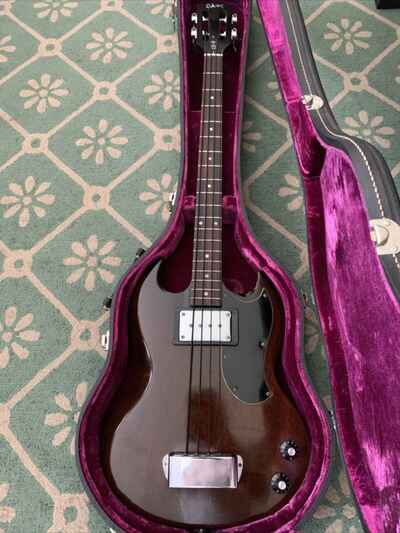
1968 Gibson EB-0 Bass Rare Slotted Head w / Original Case (EXC ) Stunning!!
Racine, Wisconsin, 534**, UNITED STATES OF AMERICA
$3995
... more

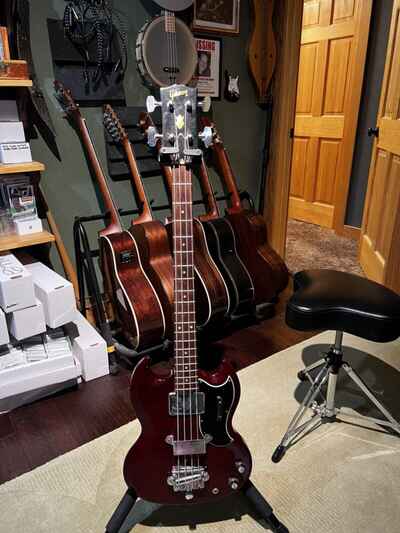
1965 Gibson EB-0 Short Scale Bass Guitar w / Original Case READ DESCRIPTION
Missoula, Montana, 598**, UNITED STATES OF AMERICA
$2796
I have the original case, but it wasn??t easily accessible at the time of posting. I may have updated or would be happy to add pics if a serious buyer wants them. Case is in rugged condition.
Thanks. Please ask questions before bidding. ... more
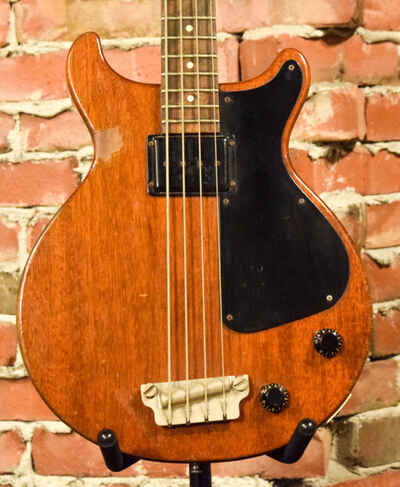
Gibson 1960 EB-0 Bass Guitar Cherry
Rochester, New York, 146**, UNITED STATES OF AMERICA
$5999
This is a double cut solid body guitar, featuring banjo-style tuners and a one pickup design. Condition-wise this piece is in great playing and sounding condition, and bears typical signs of wear and tear. Small dings, checking, and scratches can be seen on the surface, as well as more checking and wear up the neck (as seen). This will include a non original case.... more
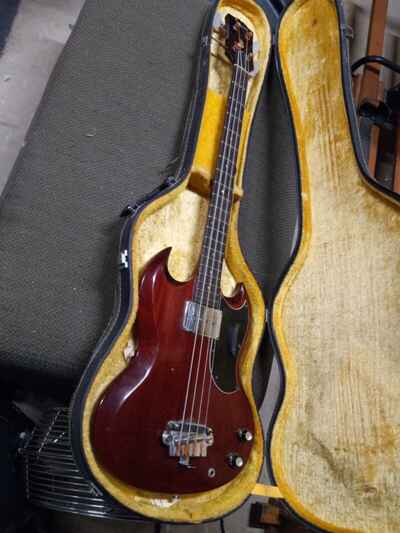
Gibson Classic 1966 EBO Bass Guitar
Adrian, Michigan, 492**, UNITED STATES OF AMERICA
$2100
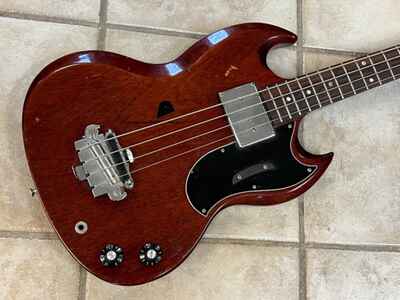
1967 Gibson EBO SG Bass Cherry Red
Doylestown, Pennsylvania, 189**, UNITED STATES OF AMERICA
$3000
1967 Gibson EBO SG shaped Bass Cherry RedNo caseWeight: 7 LBSMissing the cover that goes over the strings otherwise all original as far as I can tellNeck is straight and plays very good
D-Town Guitars1109 N Easton Rd Doylestown PA 18902 mon-fri 12-8pm sat 11-3pm EST- closed on sundays
... more
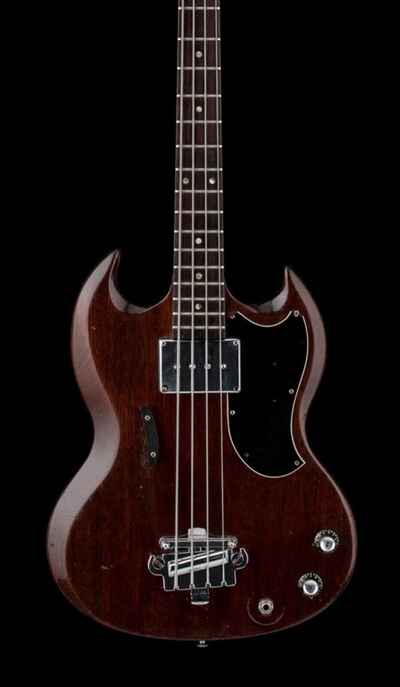
1967 Gibson EB-0 Short Scale Bass - Cherry #06247
Pittsburgh, Pennsylvania, 152**, UNITED STATES OF AMERICA
$1799
Since 2002, Empire Music has aimed to deliver the finest in-store shopping experience. Now you can receive the same amazing in-store experience through our eBay store. We promise to deliver the highest quality products and services to all of our customers This Gibson EB-0 Short Scale Bass is in GOOD overall condition. Cosmetically, it has blemishes and wear throughout but still in good overall condition. See below for a detailed description. It has been thoroughly ... more
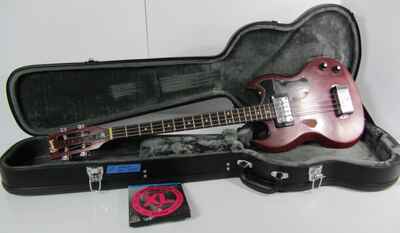
Gibson EB-0 BASS with Slotted Headstock 1969 - Cherry
Jackson, Michigan, 492**, UNITED STATES OF AMERICA
$2795
We offer a RARE Slotted Headstock Gibson EB-0 Bass Guitar "Short Scale" S / N: 928316 which I believe makes this a 1969These had what they called "Mudbucker" pickups which sound much fuller and deeper than your standard pickups. They sound really cool!I understand that these short scale basses are easier for guitar player to pick and play. I have to agree It all works as it should This Bass has seen to use but is just honest playing and not abused. Check out the pics and ... more

1969 Gibson SG EB0 Mudbucker
Wyoming, Minnesota, 550**, UNITED STATES OF AMERICA
$750
Case included
... more
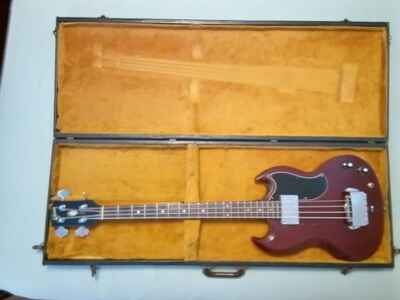
1969 Gibson EB-0 one owner bass with original custom hard sided case.
Patchogue, New York, 117**, UNITED STATES OF AMERICA
$2000

1963 Gibson EB-0 Vintage Short Scale SG Bass Cherry w / Mudbucker, Case
Seattle, Washington, 981**, UNITED STATES OF AMERICA
$3900
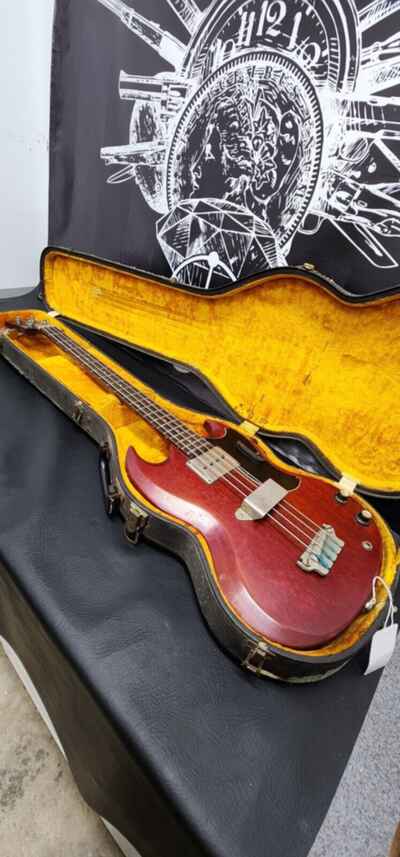
1967 Gibson eb-0 bass. lots of patina and finish checking. has hard case cm23ess
Albany, Georgia, 317**, UNITED STATES OF AMERICA
$2500
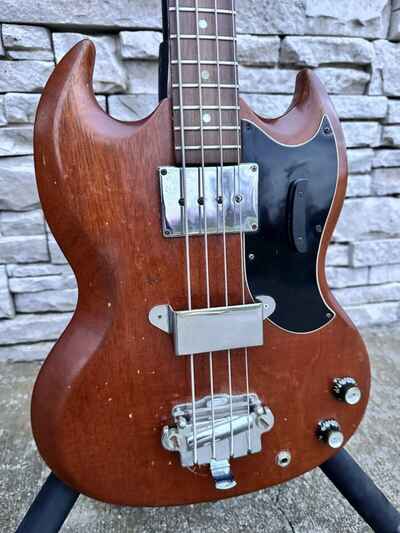
1965 EBO 3 / 4 Scale Gibson SG Red Mahogany Bass Guitar. Absolutely Stunning!!!!
Cave City, Kentucky, 421**, UNITED STATES OF AMERICA
$2100
Packed securely, insured, and tracking provided.
... more

1961 Gibson EB-0 Vintage Short Scale SG Bass Cherry w / Case
Seattle, Washington, 981**, UNITED STATES OF AMERICA
$3000
Featuring solid Honduran mahogany construction and a Brazilian rosewood fretboard, this EB-0 is lightweight at 6lbs 12oz. The famous ??Mudbucker?? pickup delivers pure, fat low-end thump and ... more
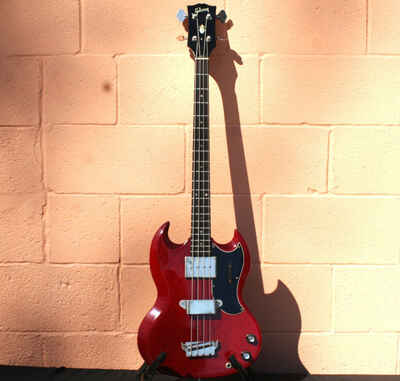
1965 Gibson EB-0 bass 100% original one owner guitar w / case
Carlisle, Pennsylvania, 170**, UNITED STATES OF AMERICA
$2999
READ THE DESCRIPTIONS
SCRUTINIZE THE PICTURES
ASK QUESTIONSNO RETURNS OR REFUNDS
Here's a 1965 Gibson EB-0, one owner, bass guitar. Immaculate condition with little if any wear. 100% original except strings. Very very little lacquer checking and one very minor touched up edge where your arm would rest. No neck or body to neck issues. No fade to the cherry red finish. Barely any appreciable fret wear. You'd be hard pressed to ... more

Vintage Early 1960's Gibson EB-0 / EB-2 Bass Bridge Mute
Brooklyn, New York, 112**, UNITED STATES OF AMERICA
$175
Very Good Condition Sold by a mom & pop music store in Brooklyn NY
... more

1964 Gibson EB 0 BASS - Made in USA
COLOGNE, GERMANY
£1296
* refinished
* plugged hole in control cavity
* no cracks on neck / headstock
* neck needs to be glued back at heel, cos it is lose=check last pic
* fingerboard has wear
* NO other parts included
* SOLD AS IS - NO RETURNS... more
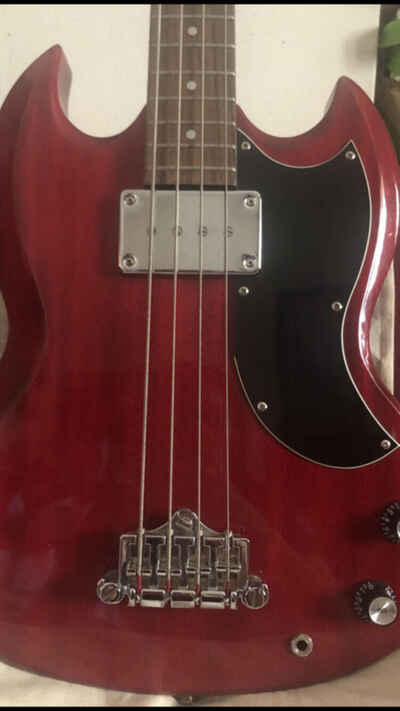
Gibson Epiphone EB-0 Cherry
Firenze, 50***, ITALY
€270
Il basso Epiphone EB-0 SG, Cherry offre una forma slanciata e elegante dello strumento in scala corta, con toni richhi e potenti che si adattano ad una vasta gamma di stili musicali. Il corpo classico SG è stato costruito con legno in mogano solido e tastiera in palissandro, fornendo insieme un tono caldo e corposo.
... more
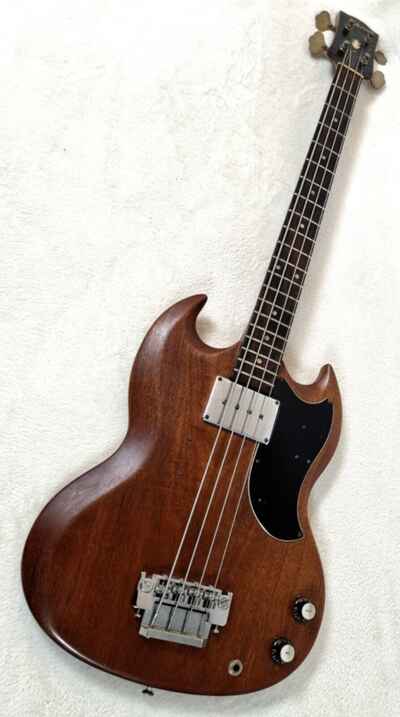
1963 Gibson EB-0 Bass
Bristol, BS5***, UNITED KINGDOM
£2275
Simply one of the finest playing vintage instruments you're likely to pick up, this bass is a beautifully kept relic. Used to inimitable effect by players such as Cream's Jack Bruce, the booming sound of that high output humbucker is a cornerstone of that 60s sound.
It consists of all mahogany construction with a nicely worn cherry finish, original subtly tarnished nickel tuners, original scratch ... more

Anything of significance you can tell me about the '75 models?
Your comments - I have the Gibson EB-0. Just trying to identify it. After some research, I'm thinking it's between '61 - '64. Don't think it's cherry, rather mahogany. I've used it 12yrs in a Country band and it fit the spot. The serial #187923. Is there anything you can offer to help me get the year mfg. Thanks, Bud
Serial numbers were re-used, so you should look at features and pot codes when deciding a date. Cherry finishes do fade somewhat over time, looking far less vibrant red than when first shipped. That serial number would suggest an early 1964 shipping date - March/ April maybe. Why not post some pics in the forum.
I have a 1967 Gibson Bass that has been made fret-less. I either want to sell it or have it re-fretted. Any ideas?
A fine bass for the dub and the classic rock styles, but who has sucess with the EBo in jazz