

• Solid mahogany body • unbound rosewood fingerboard • 3 piece maple neck • 30 1/2 inch scale • two humbucking pickups
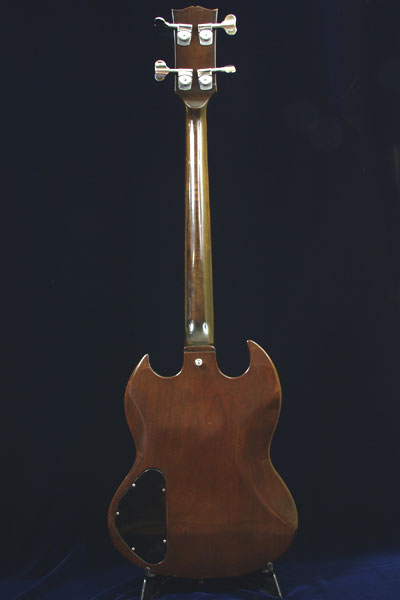
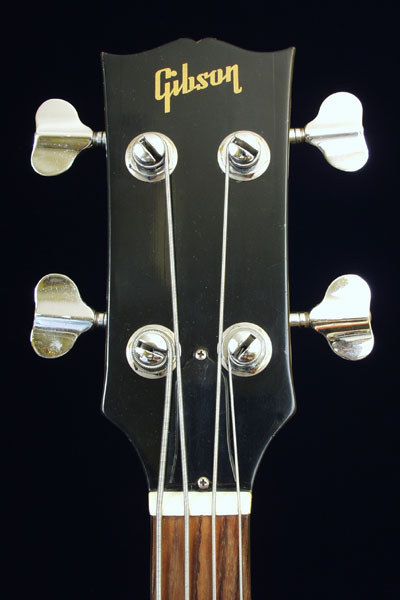
When the EB3 was redesigned for 1972, Gibson were careful to make a less fragile bass. Some of the 1960s EB basses cracked easily when dropped, or knocked about a bit. The easily-broken mahogany neck had been replaced with a thicker three-piece maple one. It was given a thicker body, and a bigger headstock. It had a volute for neck strength; much more durable. But it still had the characteristic EB humbucker, moved away from the neck, and a varitone/tone choke.
The first two years of this remodelling (1972 and 1973) saw acceptable sales of EB3 (including long scale versions 1350 and 2400 instruments shipped respectively) and because of their durability, most are still in existence today. As well as the thousands of instrument produced in cherry and walnut finishes (like the instrument featured above), a small number were available in ebony (10), natural (49) and towards the mid-late seventies, white (69).
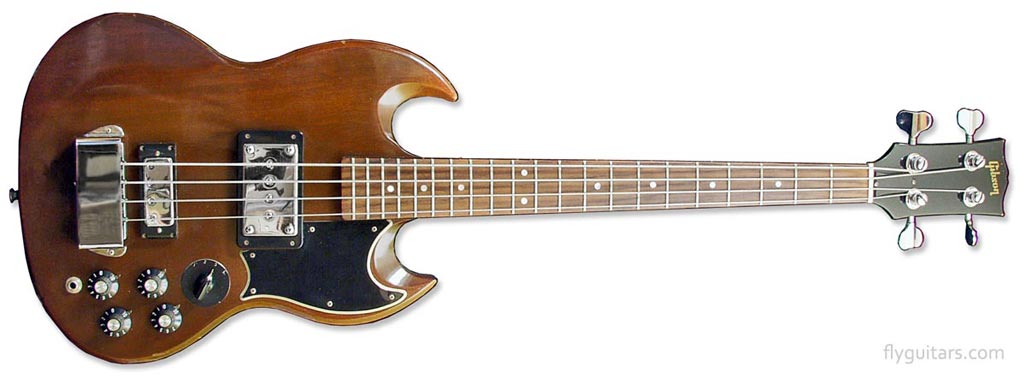
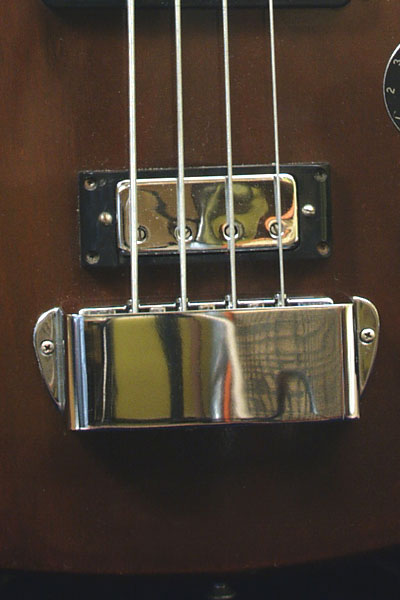
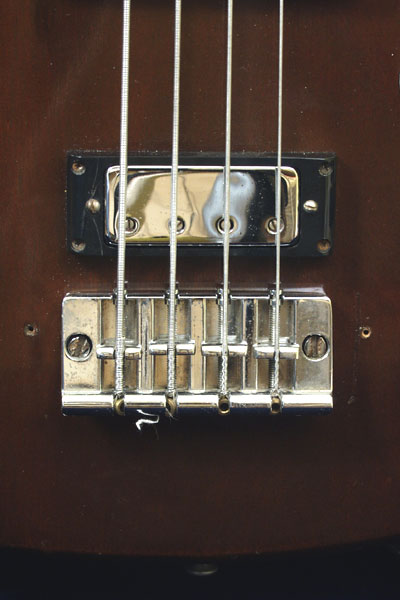
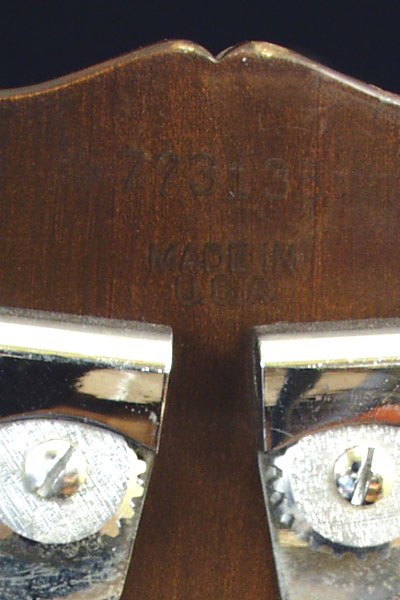
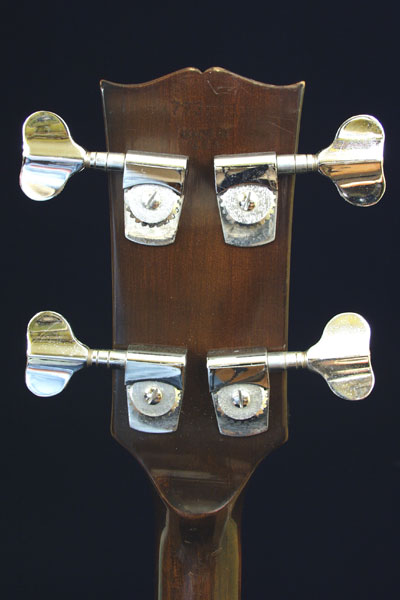
This is a typical early seventies Gibson. It is unusual to find a snapped neck post-1972 EB3. Maple, though less brittle than mahogany does warp more easily, and whilst you won't find many warp-necked sixties models, you will sometimes with these maple-necked versions. Notice the volute (on the back of the headstock), and the two two point bar bridge with cover. Three point bridges were not in use until mid-1973. The machine heads are Schaller M4-S, as fitted on all solid headstock EB basses 1971-73 (until the introduction of the Schaller BM). This style of pickguard was used on all EB models from 1972 until they were last produced in 1979. This is one of 354 walnut (compared to 530 cherry) EB-3 basses shipped in 1972.
The 1972 EB-3 had series 2 circuitry
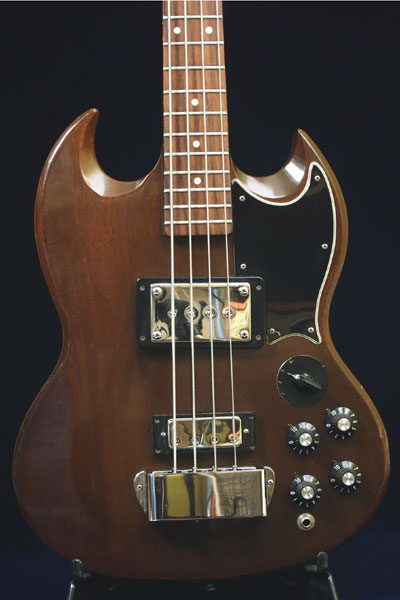
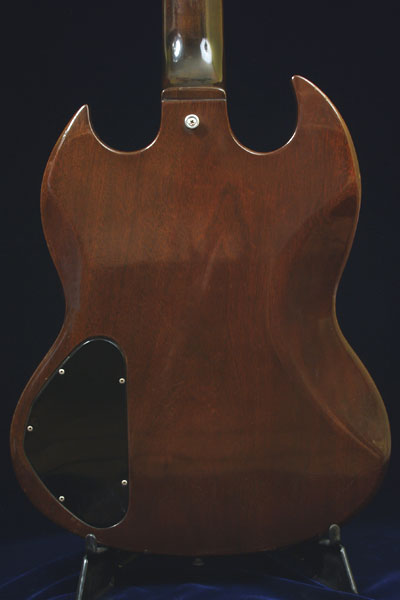
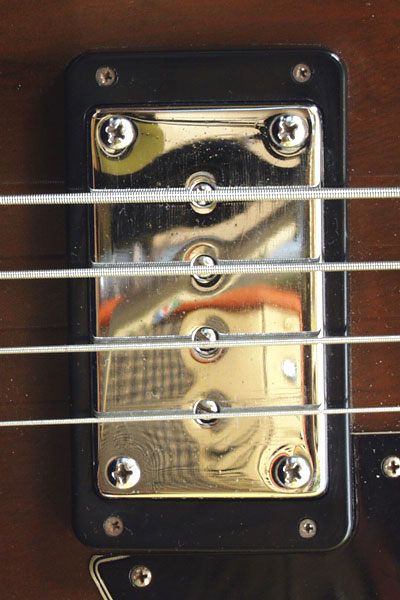
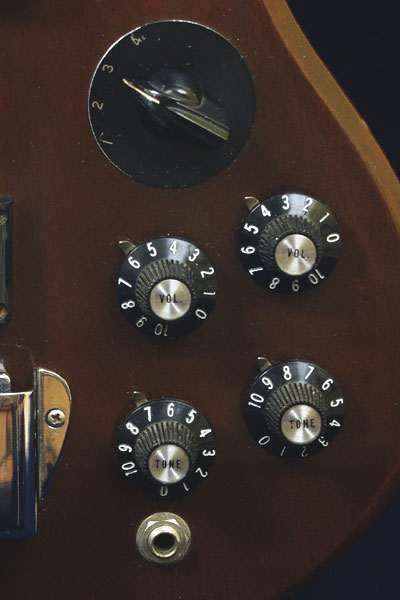
This was one of the first EB3s with the modified series 2 circuitry.
Gibson EB3 sound clips
Each clip features the introductory 4 bars of rescue me (Fontella Bass) played on a 1972 EB3.
Varitone position 1
neck pickup only
treble turned to 0
Varitone position 2
bridge pickup only
Varitone position 3
both pickups
Varitone position 4
neck pickup only, with tone choke
Have a look at these other EB basses in the 1972 line up: the one pickup EBO, and it's longscale equivalent the EB0L; plus a longscale EB3, the EB3L.
Gibson EB3 bass for sale

"1973" Vintage Cherry "GIBSON EB-3" with OHSC Serial #056076 in Great Condition
Riverside, California, 925**, UNITED STATES OF AMERICA
$3795

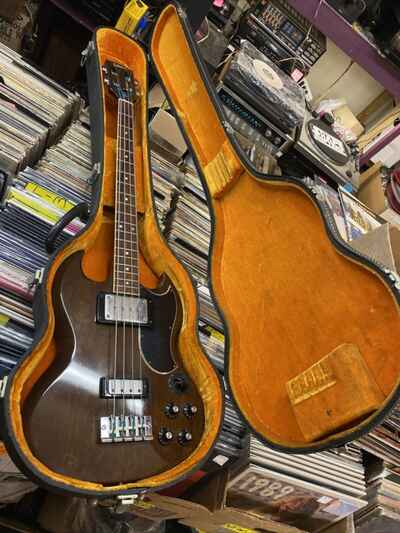
Gibson EB-3 Cherry Mod 1969 Electric Bass Guitar Original Case Slotted Head Art
El Segundo, California, 902**, UNITED STATES OF AMERICA
$3500
... more
Gibson Slothead EB-3 1971 - Cherry Fretless Bass w / Original Gibson Case
Huntington, Indiana, 467**, UNITED STATES OF AMERICA
$1500
This bass is an absolute monster and sounds incredible! I don't know for sure (I kinda doubt it) that this would have come from the Gibson factory as fretless. However, whoever did the job has done it professionally and it looks great!
The electronics work perfectly and it has that classic "double bass" tone in the first position!
There is some bow in the neck. The truss doesn't ... more
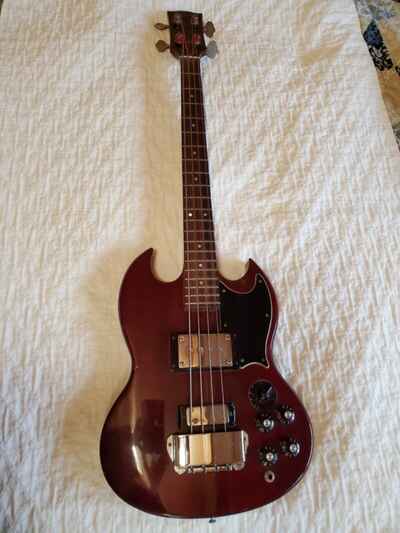
Gibson EB3 Bass Vintage
Edmonton, Kentucky, 421**, UNITED STATES OF AMERICA
$1990
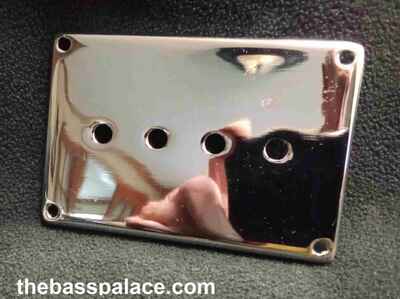
GIBSON 1966 BASS CHROME PICKUP COVER LARGE HUMBUCKER EB-O EB-2 EB-3 EPI RIVOLI
Berlin, New Hampshire, 035**, UNITED STATES OF AMERICA
$59
There's nothing worse than not having a cover for that big Gibson bass humbucker. It's one butt-ugly pickup without it! This is correct for late 1965 thru 1970 EB-O, EB-2 and EB-3 models as well as 1969 & 1970 EB-1 basses. It will also fit Epiphone Rivoli basses. This version has the small-head mounting screws (not included) Gibson changed the height and the position of this cover in 1970 and enlarged the mounting screw holes. Dimensions are 3 3 / 8" wide by 2 1 / 4" ... more

Vintage Gibson EB3 Bass Guitar
Upper Sandusky, Ohio, 433**, UNITED STATES OF AMERICA
$2477
... more
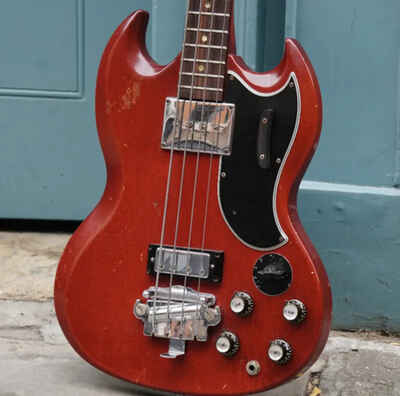
Gibson EB-3 1965 - Cherry Red JACK BRUCE CREAM
Doncaster, DN6***, UNITED KINGDOM
£5499
Internally / Externally Original
Mahogany body / rosewood fretboard
Humbucking pickup in the neck and mini-humbucker in the bridge
Four-way rotary pickup selector switch
Condition 8 / 10
Case
ALL ... more

1963 Gibson EB-3 Bass ex Bob Daisley (Rainbow, Black Sabbath)
Doncaster, DN6***, UNITED KINGDOM
£7999
We are happy to offer the following from the personal Private Collection of The Blizzard Himself that Being Bob Daisley whom is Heavy Rocks most distinguished and respected of all Bass Players and Songwriters, details as follows
History
The history and career of Bob Daisley is Legendary and has been one of the main contributors to the sound, look, style of the following Iconic Hard Rock artists some of which are as follows:
Rainbow - Black Sabbath - ... more
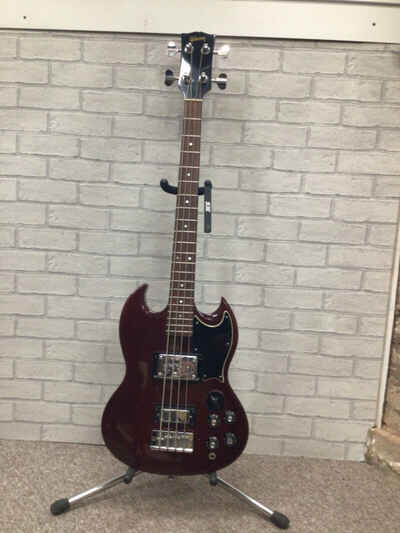
Gibson EB-3 Bass Guitar 1967
Horncastle, LN9***, UNITED KINGDOM
£2950
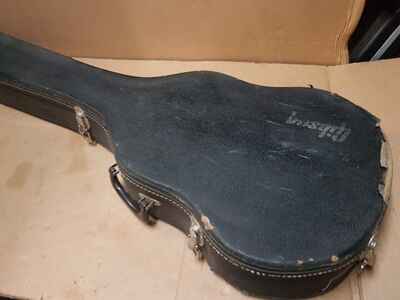
1971 Gibson EB 3 HÜLLE - passt NUR SCHLITZKOPF Version
COLOGNE, GERMANY
£399
* CASE ONLY !
* strap that holds case open=GONE
* bottom and top are loose =need reglueing
* tolex has rips
* all latches are working fine
* check all pics
* SOLD AS IS - NO RETURNS... more
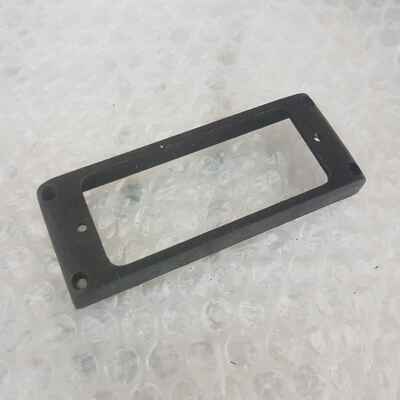
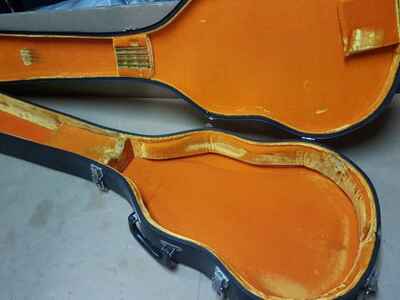
1971 GIBSON EB 3 SLOTTED HEADSTOCK BASS CASE - made in USA
COLOGNE, GERMANY
€444
* CASE ONLY !
* strap that holds case open=GONE
* bottom and top are loose =need reglueing
* tolex has rips
* all latches are working fine
* check all pics
Over 1000 more
GUITARS-BASSES-PARTS in our OTHER
AUCTIONS !!!!
TAKE A LOOK !!!... more
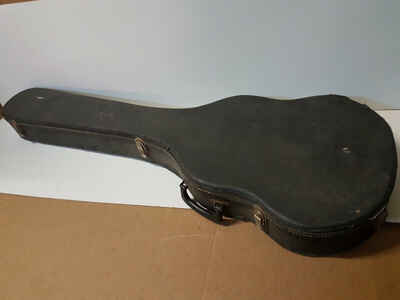
1971 GIBSON EB 3 SLOTTED HEADSTOCK BASS CASE - made in USA
COLOGNE, GERMANY
€399
* CASE ONLY !
* interior has stains
* tolex has rips
* all latches are working fine
* worn but solid
* check all pics
PLENTY of PARTS for SALE
ATTENTION! OVER 1000 more
GUITARS-BASSES-AMPS-PARTS
in our OTHER AUCTIONS !!!
CHECK OUR SHOP OUT -------------->>>>>-------------->>>>>
... more
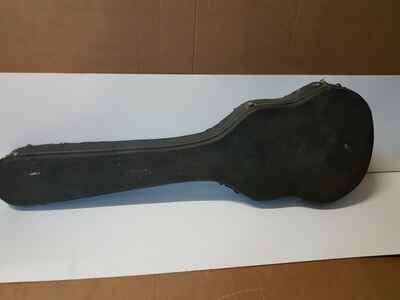
1971 Gibson EB 3 SLOTTED HEADSTOCK BASS CASE - Made in USA
COLOGNE, GERMANY
£345
* CASE ONLY !
* interior has stains
* tolex has rips
* all latches are working fine
* worn but solid
* check all pics
... more

Gibson EB-3L 1973 - Vintage Bass Guitar, Long Scale - Original Hard Case - Rare!
Meadow Heights, VIC, 3***, AUSTRALIA
AU $4895
Long Scale 1973 model bass guitar with original hard case
All pictures supplied with the auction are of the actual item for sale, and indicate its condition
This vintage Gibson is in good playable condition with a clean fingerboard and neck, good fretting and fully functional tuners. This model is fitted with a drop-D tuner (adjustable) which functions well. The pickups and wiring appear original, are operational, and it sounds superb. It has been fitted with a set... more
The 1972 EB 3 walnut finish Short scale is just what I'm looking for. Do you have a price on it?