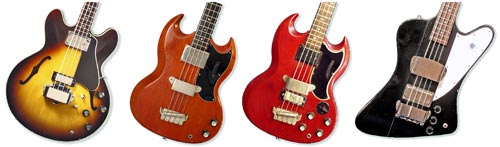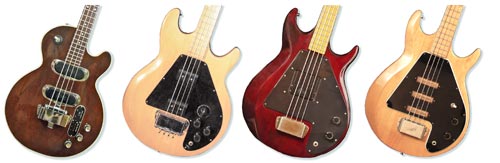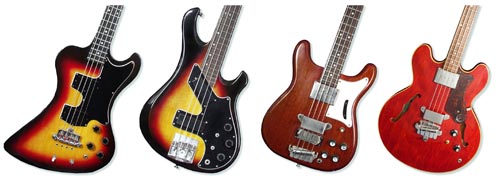
This site is dedicated to vintage Gibson bass guitars and vintage Epiphone bass guitars: specifically electric basses produced at Gibson's legendary Kalamazoo plant, in Michigan, USA. There's a lot of detailed technical and historical information on the various Gibson bass models and the components fitted to them: follow the links on the right for specifications, shipping data, wiring charts etc.
Jump straight to the content: Gibson EB-0, EB-0F, EB-1, EB-2, EB-3, EB-4L, SB300/400, SB350/450, Melody Maker bass, Thunderbird, Les Paul bass, Les Paul Triumph, Les Paul Signature, Ripper, Grabber, G-3, RD series, Victory series; Epiphone Rivoli, Newport and Embassy Deluxe
And check out the section on interviews with musicians associated with Gibson bass guitar: Jack Casady, Mike Watt, Andy Fraser and numerous others
| Interview: Dave Kiswiney |
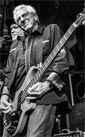 Dave Kiswiney has played Gibson (and latterly Heritage) bass guitars for his entire career. As a musician, he is best known for his time playing the Gibson Ripper with Ted Nugent; as a Gibson endorsing artist, he was the face of the Gibson Victory bass - appearing in all the advertising at the time. Dave has always preferred active instruments, and owns a number of (almost) unique active basses, an active single pickup Victory, an active single pickup Gibson Explorer bass, and a five string Heritage bass. Read his interview to find out about his career in music, his time with Ted Nugent and his amazing bass collection. Dave Kiswiney has played Gibson (and latterly Heritage) bass guitars for his entire career. As a musician, he is best known for his time playing the Gibson Ripper with Ted Nugent; as a Gibson endorsing artist, he was the face of the Gibson Victory bass - appearing in all the advertising at the time. Dave has always preferred active instruments, and owns a number of (almost) unique active basses, an active single pickup Victory, an active single pickup Gibson Explorer bass, and a five string Heritage bass. Read his interview to find out about his career in music, his time with Ted Nugent and his amazing bass collection.
|
| 1981 Gibson Victory Standard |
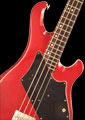 The Victory bass series was designed by the Gibson research and development team, based in Kalamazoo, Michigan, though all but a few demonstration models were produced at the newer Nashville plant. This was the first bass model to be exclusively produced there. The Victory Standard was included in price lists from 1981 until 1986, though the vast majority, like the bass featured here were built in the second half of 1981. The Victory bass series was designed by the Gibson research and development team, based in Kalamazoo, Michigan, though all but a few demonstration models were produced at the newer Nashville plant. This was the first bass model to be exclusively produced there. The Victory Standard was included in price lists from 1981 until 1986, though the vast majority, like the bass featured here were built in the second half of 1981.
|
| 1964 Gibson EB0 |
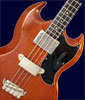 The EB series evolved throughout the period of production, with (mostly) minor hardware and construction changes occurring every couple years. 1964 basses are typified by their mix of early features: wide, but slightly shallower neck, non-intonatable bridge, 'small' control cavity cover and nickel-plated hardware; most obviously the pickup cover (previously black bakelite - compare with a 1962 EB0, later chrome-plated - see this 1966 EB0) The EB series evolved throughout the period of production, with (mostly) minor hardware and construction changes occurring every couple years. 1964 basses are typified by their mix of early features: wide, but slightly shallower neck, non-intonatable bridge, 'small' control cavity cover and nickel-plated hardware; most obviously the pickup cover (previously black bakelite - compare with a 1962 EB0, later chrome-plated - see this 1966 EB0)
|
| 1972 Gibson EB0L |
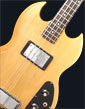 A very unusual long scale 1972 Gibson EB0L practically all Gibson EB-0 bass guitars had a mahogany body with a translucent Cherry or Walnut finish. This bass has an alder body with natural finish, and somewhat different hardware, with more in common with an Gibson SB-450, rather than a typical seventies EB bass. Despite being built in 1972, this bass was most likely one of just 5 natural EB-0 basses shipped in 1973, according to the EB-O shipping stats. A very unusual long scale 1972 Gibson EB0L practically all Gibson EB-0 bass guitars had a mahogany body with a translucent Cherry or Walnut finish. This bass has an alder body with natural finish, and somewhat different hardware, with more in common with an Gibson SB-450, rather than a typical seventies EB bass. Despite being built in 1972, this bass was most likely one of just 5 natural EB-0 basses shipped in 1973, according to the EB-O shipping stats.
|
| 1978 Gibson G-3 |
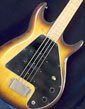 The Gibson G-3 bass was first shown to the public at the 1975 NAMM show, and was an immediate success; it remained in production throughout the 70s, with small numbers being shipped in 1982 and 1985. The three in G-3 is, of course, a reference to the three pickups and associated circuitry designed by Gibson employee Bill Lawrence. The vast majority of G-3s shipped had a Natural or Ebony finish, although small numbers had a Candy Apple Red, White, Walnut, Wine Red or Tobacco Sunburst as shown here. For more, see the G-3 production totals. The Gibson G-3 bass was first shown to the public at the 1975 NAMM show, and was an immediate success; it remained in production throughout the 70s, with small numbers being shipped in 1982 and 1985. The three in G-3 is, of course, a reference to the three pickups and associated circuitry designed by Gibson employee Bill Lawrence. The vast majority of G-3s shipped had a Natural or Ebony finish, although small numbers had a Candy Apple Red, White, Walnut, Wine Red or Tobacco Sunburst as shown here. For more, see the G-3 production totals.
|
| 1974 Gibson L-9S Ripper |
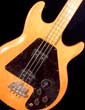 Although a few were completed in 1973, 1974 was the first year the Gibson Ripper bass was shipped in any numbers. It was one of the first new designs by Bill Lawrence who came to Gibson in the early 1970s. Early examples, like this, have a wider slab body, without the sculptured bevelling of later Rippers, but are essentially the same in other respects. The Ripper was in sharp contrast to the short scale 'muddy' mahogany basses that had dominated Gibsons output of the previous decade, and was immediately sucessful. Have a listen to the soundclips of this bass, through several vintage amplifiers. Although a few were completed in 1973, 1974 was the first year the Gibson Ripper bass was shipped in any numbers. It was one of the first new designs by Bill Lawrence who came to Gibson in the early 1970s. Early examples, like this, have a wider slab body, without the sculptured bevelling of later Rippers, but are essentially the same in other respects. The Ripper was in sharp contrast to the short scale 'muddy' mahogany basses that had dominated Gibsons output of the previous decade, and was immediately sucessful. Have a listen to the soundclips of this bass, through several vintage amplifiers.
|
| 1961 Gibson EB3 |
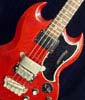 A 1961 Gibson EB3 bass. 1961 was the first year of EB3 production, and the year Gibson first used the classic SG shape. Like the SG guitars, the EB3 was built at the Gibson plant in Kalamazoo. Early EB3s are characterised by their chunky necks, wide-spaced controls, nickel hardware and bakelite neck pickup cover. Have a listen to the soundclips of this bass, through several vintage amplifiers. A 1961 Gibson EB3 bass. 1961 was the first year of EB3 production, and the year Gibson first used the classic SG shape. Like the SG guitars, the EB3 was built at the Gibson plant in Kalamazoo. Early EB3s are characterised by their chunky necks, wide-spaced controls, nickel hardware and bakelite neck pickup cover. Have a listen to the soundclips of this bass, through several vintage amplifiers.
|
| 1966 Gibson EB0 |
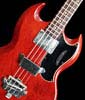 Profile of a 1966 Gibson EB0 bass. The EB0, like it's big brother the EB3, is something of a 1960s classic; the construction (short scale, mahogany body, set mahogany neck), and the famous Gibson EB humbucker positioned at the neck, gave a deep rumble that perfectly suited the musical environment of the early-mid sixties. But by the early-mid seventies things were going long-scale and maple... Nonetheless, this is a finely built instrument, capable of some terrific sounds that really suit certain musical situations. Have a listen to the soundclips of this bass, through various vintage amplifiers. Profile of a 1966 Gibson EB0 bass. The EB0, like it's big brother the EB3, is something of a 1960s classic; the construction (short scale, mahogany body, set mahogany neck), and the famous Gibson EB humbucker positioned at the neck, gave a deep rumble that perfectly suited the musical environment of the early-mid sixties. But by the early-mid seventies things were going long-scale and maple... Nonetheless, this is a finely built instrument, capable of some terrific sounds that really suit certain musical situations. Have a listen to the soundclips of this bass, through various vintage amplifiers.
|
See older updates
| 1973 Hagstrom Swede Bass |
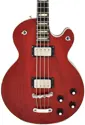 The Hagstrom Swede bass, or model HB 903, was only built in small numbers: just 1479 basses shipped between 1971 and 1976. Unlike the current range of Hagstrom guitars, the 1950s-1980s Hagstroms were built in Sweden. This example comes from 1973 and is pretty typical: translucent cherry finish, mahogany body, mahogany neck with an ebony fretboard. It's a really nice bass, beautifully appointed with a very wide tonal range, and a great playing feel. It is relatively heavy though for a mahogany instrument, mostly due to its thick solid body. Very cool bass, and certainly one of the very best basses produced by Hagstrom. The Hagstrom Swede bass, or model HB 903, was only built in small numbers: just 1479 basses shipped between 1971 and 1976. Unlike the current range of Hagstrom guitars, the 1950s-1980s Hagstroms were built in Sweden. This example comes from 1973 and is pretty typical: translucent cherry finish, mahogany body, mahogany neck with an ebony fretboard. It's a really nice bass, beautifully appointed with a very wide tonal range, and a great playing feel. It is relatively heavy though for a mahogany instrument, mostly due to its thick solid body. Very cool bass, and certainly one of the very best basses produced by Hagstrom.
|
| 1973 Shaftesbury 3400 |
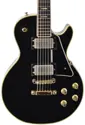 This example of the Shaftesbury 3400 was produced by Japanese manufacturer Matsumoku who made some great quality guitars in the 1970s and 1980s. This is a slightly later example, and has some features not seen on earlier 3400s. Although nice guitars, these are not in the same league as the Gibson Les Paul it was emulating (no set neck, no carved maple top); but they are far better than many of the entry-level Les Paul copies available in the mid-1970s - for example the Shaftesbury 3400 has gold plated hardware, a solid body bound front and back, Maxon brand humbuckers and nice inlaid neck and headstock. This example of the Shaftesbury 3400 was produced by Japanese manufacturer Matsumoku who made some great quality guitars in the 1970s and 1980s. This is a slightly later example, and has some features not seen on earlier 3400s. Although nice guitars, these are not in the same league as the Gibson Les Paul it was emulating (no set neck, no carved maple top); but they are far better than many of the entry-level Les Paul copies available in the mid-1970s - for example the Shaftesbury 3400 has gold plated hardware, a solid body bound front and back, Maxon brand humbuckers and nice inlaid neck and headstock.
|
| 1971 Epiphone 1802T |
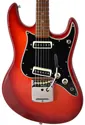 The Epiphone 1802T was the early name given to the Epiphone ET-270 and derived from an existing Aria guitar, also the 1802T. This was the first of the 1970s Epiphone solid bodies made in Japan by Matsumoku.The model evolved somewhat over its short production run: the very earliest examples were very similar to the Aria, sharing the same body shape, hardware, and clear-coated neck with Fender-style headstock with decal logo. By the time it was designated the Epiphone ET-270 it had been upgraded with the classic Epiphone-style headstock, with nice inlaid logo, and Epiphone 'E' motifs on the truss rod cover and scratchplate. This example from 1971 is somewhere in between with the Epiphone-style headstock, but with silk-screened logo, and no 'E's. The Epiphone 1802T was the early name given to the Epiphone ET-270 and derived from an existing Aria guitar, also the 1802T. This was the first of the 1970s Epiphone solid bodies made in Japan by Matsumoku.The model evolved somewhat over its short production run: the very earliest examples were very similar to the Aria, sharing the same body shape, hardware, and clear-coated neck with Fender-style headstock with decal logo. By the time it was designated the Epiphone ET-270 it had been upgraded with the classic Epiphone-style headstock, with nice inlaid logo, and Epiphone 'E' motifs on the truss rod cover and scratchplate. This example from 1971 is somewhere in between with the Epiphone-style headstock, but with silk-screened logo, and no 'E's.
|
| 1971 Shaftesbury 3400 |
 Shaftesbury was a brand distributed by Rose-Morris in the UK - generally imported guitars from Italy or Japan. This guitar, model 3400 was produced by Matsumoku in Japan, and was one of the earliest Les Paul copy guitars, debuting in the UK in 1969, although the same guitar was also sold as the Univox U1982 'Rhythm and Blues' by Merson in the USA as early as 1968. It was also available in different territories under different marques, most obviously the Aria 5522 (Japan), Jedson Jet 4444 (UK, Dallas Arbiter), with no doubt many more examples worldwide. Shaftesbury was a brand distributed by Rose-Morris in the UK - generally imported guitars from Italy or Japan. This guitar, model 3400 was produced by Matsumoku in Japan, and was one of the earliest Les Paul copy guitars, debuting in the UK in 1969, although the same guitar was also sold as the Univox U1982 'Rhythm and Blues' by Merson in the USA as early as 1968. It was also available in different territories under different marques, most obviously the Aria 5522 (Japan), Jedson Jet 4444 (UK, Dallas Arbiter), with no doubt many more examples worldwide.
|
| 1981 Gibson Victory MVX |
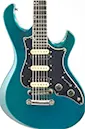 The Gibson Victory MV-X, or Victory 'Multi-Voice' 10, was so-named because of the 10 distinct switch settings: although on first glance this guitar is very much a 'super-strat', with its three-pickup five-way switch wiring configuration, the original advertising, sounds like... all of 'em underlines that this isn't just a Stratocaster copy, having the sounds of both Gibson humbuckers and Fender single coils available with a flick of a switch. The model was short-lived, with the first instruments shipping from Kalamazoo in Summer of 1981, and the last (excluding any stragglers) leaving Nashville by early 1982. This one, in Twilight Blue, was stamped on August 3rd 1981 in Kalamazoo. The Gibson Victory MV-X, or Victory 'Multi-Voice' 10, was so-named because of the 10 distinct switch settings: although on first glance this guitar is very much a 'super-strat', with its three-pickup five-way switch wiring configuration, the original advertising, sounds like... all of 'em underlines that this isn't just a Stratocaster copy, having the sounds of both Gibson humbuckers and Fender single coils available with a flick of a switch. The model was short-lived, with the first instruments shipping from Kalamazoo in Summer of 1981, and the last (excluding any stragglers) leaving Nashville by early 1982. This one, in Twilight Blue, was stamped on August 3rd 1981 in Kalamazoo.
|
| 1970 Rosetti Epiphone guitar catalogue |
 Scan of 1970 Epiphone guitar catalogue produced by Rosetti for the UK market. Undated but most likely from mid-late 1970, this was the first UK catalogue to show the new range of Japanese (Matsumoku) Epiphone guitars. Interestingly, these pages show the Epiphone solid bodies with a single-sided Fender-style headstock layout - a feature quickly replaced with a typical two-sided Epiphone headstock almost immediately. Epiphone electric guitars: 9520, 9525; bass guitars: 9521, 9526; acoustic guitars: 6730, 6830, 6834 Scan of 1970 Epiphone guitar catalogue produced by Rosetti for the UK market. Undated but most likely from mid-late 1970, this was the first UK catalogue to show the new range of Japanese (Matsumoku) Epiphone guitars. Interestingly, these pages show the Epiphone solid bodies with a single-sided Fender-style headstock layout - a feature quickly replaced with a typical two-sided Epiphone headstock almost immediately. Epiphone electric guitars: 9520, 9525; bass guitars: 9521, 9526; acoustic guitars: 6730, 6830, 6834
|
| A World of Guitars by Rosetti - 1971 |
 Scan of 1971 Rosetti catalogue (UK) featuring guitars from from numerous manufacturers worldwide: guitars by Epiphone, Hagstrom, Levin, Hoyer, Egmond, Eros, Moridaira, Kiso-Suzuki, Schaller, and Tatra. Scan of 1971 Rosetti catalogue (UK) featuring guitars from from numerous manufacturers worldwide: guitars by Epiphone, Hagstrom, Levin, Hoyer, Egmond, Eros, Moridaira, Kiso-Suzuki, Schaller, and Tatra.
|
Visit vintageguitarandbass.com
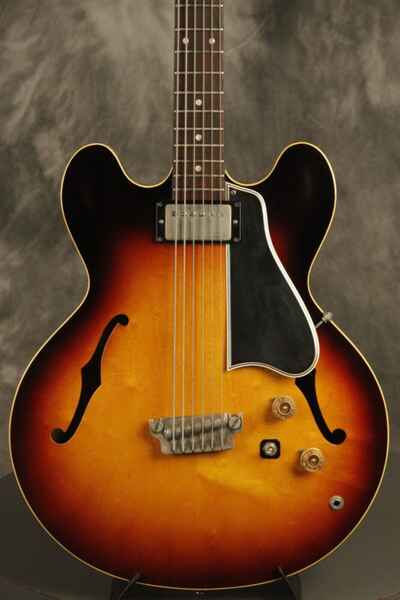
$14900

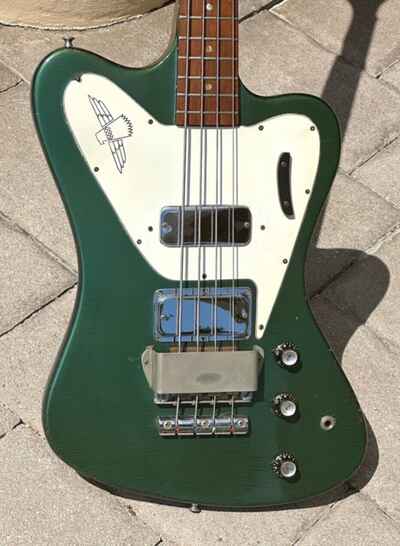
$13495
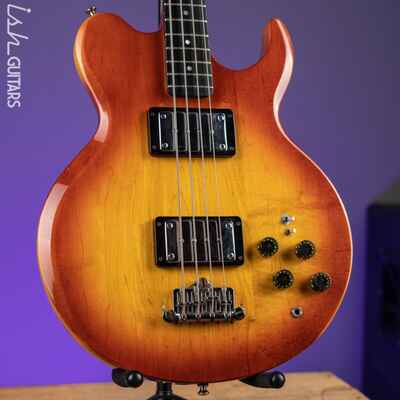
$9000
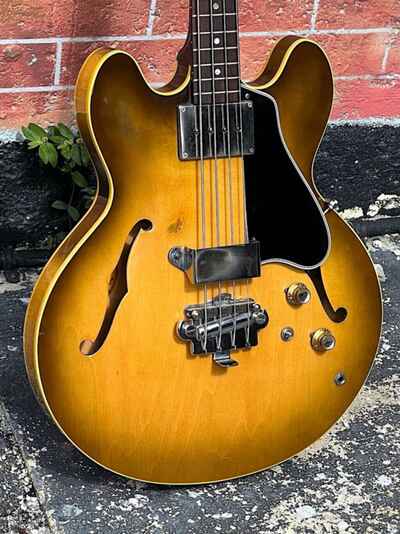
$8995
$8695
$6900
$6500
$6495
$5999
$5995

$5200
$5000
$4950
$4750
$4730
$4500
$4000
$4000
$4000
$3995