
Wishbone Ash (1975-1980)
FlyGuitars I think you've proved in the recordings that it works well for what you've done. Do you think like Laurie changed the dynamic of the band at all or was it a combination of the fact you were recording in America and Laurie joining?
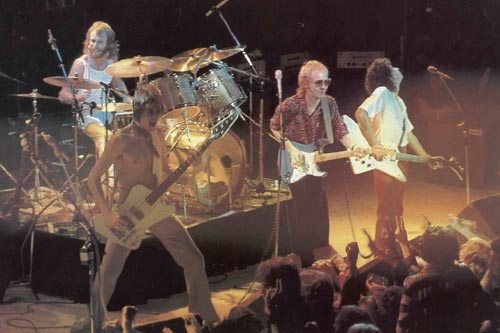
Martin Turner Laurie couldn't have been more different than Ted really. Ted and Andy had a fantastic rapport, Ted was the blues feel merchant and Andy was the kind of flash front man leaping about all over the place and playing all the flash stuff. When Laurie joined the band he's this good looking little mighty munchkin who could play licks that we didn't even know existed, he was so flash he really was. I used to tell him hey man it's not about how many notes you can squeeze in to the friggin' song just relax but he's a great guitar player you cannot fault his technique it's really, really impressive. Unfortunately I think Andy kind of found that a bit intimidating at first. I could tell that it really fazed him, it knocked him back in terms of his confidence. Laurie and him would be playing together and he'd be struggling to stay with Laurie so then I'd find him in the corner of the studio practising to get up to Laurie's speed. I'm like Andy listen mate you don't need to do that, that punchy little new boy might be flash but he can't do what you do, stick with your blues thing but Andy needed to do that. It's always good to learn new skills and he did, he picked up a lot from Laurie and eventually emerged as an even more confident more accomplished musician; but I think at first it was quite a shock to the whole band just the impact Laurie had largely because he was so radically different from Ted. Had we brought in another player who was similar it wouldn't have been so seismic.
FlyGuitars Is there an album you can say from that that you think would be definitive for the mark 2 lineup?
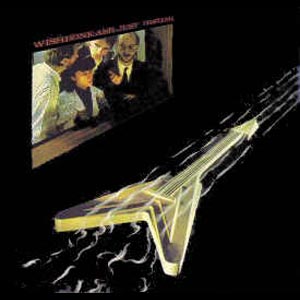
Martin Turner When we did Just Testing in ?80 we'd been back in England because we'd been living in the States for three years. I felt it was wrong to go and live in America. We were spending huge amounts of time and working there, I think we were in danger of losing our British identity and I think actually we did and in the case of the dreaded Locked In I think we completely lost our identity there for ten minutes. What the hell were we trying to do? At the end of the Locked In album I was convinced my career was finished. As far as I was concerned the album sucked it sounded horrible. I had a major problem with my vocal chords and I ended up in a bloody foetal position on the floor sobbing and I was ready to call Samaritans, it was desperate. I think gradually we re-established our identity because the American experience, the culture is very stimulating in so many ways but also extremely overwhelming, you can't help but become immersed. Although us English partners speak the same language it's not the same culture. Just Testing we did at Surrey Sound and it was a funky little place that I'd work in doing sessions and stuff and I really liked it. It wasn't as big and corporate as some of the places we'd been and I felt it gave a bit more freedom and for me that particular album contains some of my best creative moments both as a singer and a songwriter and also as a bass player. I know that the way that the pitch of understanding that Steve and I had established at that point was akin to telepathy. I mean we just kind of were bolted together when we were playing musically and I could literally be standing there recording and I'd be looking at my fingers but it was like watching someone else. I wasn't that conscious of what I was doing and the thing was so locked together.
FlyGuitars You lock in on fills and stuff don't you?
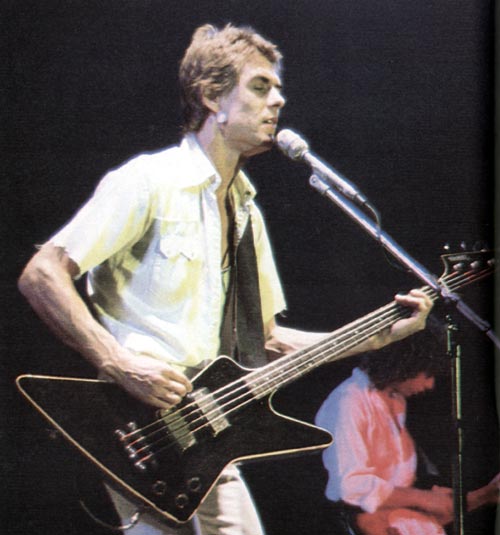
Martin Turner Yeah that's right and Laurie was playing some great rhythm guitar when we were putting the backing tracks down that had a lovely rock 'n' roll edge to it. Andy at the time was the one guy that lived way up north of London and we were down in Leatherhead doing the album, he also had two small kids so he had to be up with his family quite a bit around that era. He did come to the studio but not as much as the rest of us and although that album was hard work, it always is, it was intense, I really enjoyed making it. Even now I can listen to say New Rising Star which is not one of the main songs, it's tucked away on the album it's not dynamic it's slow and pacey but I love what I'm doing on the bass. I love the bass not me, because it's got an incredible freedom about it that you can only get when you've got immense confidence and you're working together with a team that gives you that. That's a wonderful, wonderful feeling to have when you're making music it really is and that high that I got when I was making that music comes back to me when I listen to it.
FlyGuitars I'll have to check that one out cause I've not listened to it.
Martin Turner You could say the same about some of the others, Insomnia is a bit manic, I mean the guitar sound that we put together for Andy it's hard to believe that it's a bloody guitar. It sounds like a synthesizer It's an outrageous sound really. It maybe wasn't as commercial as everyone wanted. I think everyone seemed to be at the time a bit thirsty for commercial success that they'd see other bands getting around them but I didn't give a fuck about that. It's like I'm going to do what I do and I felt that that some of that stuff we were doing was really a bit experimental and arty arguably but it was certainly what I was in to and that was why I was so gob smacked when they turned round and said they wanted to get a singer in the band.
FlyGuitars Is that when things started to go wrong for the Mark 2 line up?
Martin Turner I was absolutely gob smacked partly because I thought it was the most stupid decision I'd ever heard. A band that peaked in 1973 and its now 1980, we'd just been paid a quarter of a million dollars to make an album and you guys are bitching about lack of success. What the fuck are you on you know. Lack of success my arse, the last gig we played was in a Spanish bull ring and we got paid like eight grand, what are you talking about lack of success, ?well no we're talking you know commercially?.
FlyGuitars I think a lot of bands would kill for what you've had in Wishbone
Martin Turner I said that to them, what you mean commercially what you want to be on friggin' Top Of The Pops and they're like 'yeah it'd be good. You know, front man we'd be able to do some of that shit.' I'm saying Jesus you guys are creating a problem that doesn't exist, you're then trying to fixed it with some half arsed friggin' idea that ain't gonna work. What is this singer going to do when I'm singing the Argus material on stage is he going to sing it for me or is he going to stand at the side of the stage with a pint of beer while I sing it as I did on the record? So it was ?ah we knew you were going to say that so we've decided we are going to do it whether you like it or not?. I was like oh yeah, we've got a little conspiracy going on here. Right you fucking guys need to get out of my house right now cause I was about to hit someone. I was that fuming I mean I had steam coming out of my ears. I was so friggin' angry and it's like right you bunch of creeps sod off. I was so emotional about it I was in danger of hurting someone and they all slunk out of the door like naughty dogs and that was the end of my involvement in Wishbone Ash 1980.
FlyGuitars You got back together with the mark one line up around 87 was it?
Martin Turner Yeah I was kind of beginning to calm down a bit by then. I mean for years I didn't even want to hear the name Wishbone Ash so traumatised was I.
FlyGuitars At that time after Wishbone Ash in 1980, did you get approached by other bands or consider working with other bands? Or did you kind of think no I want to take a back seat now?
Martin Turner I had various offers, some of them absolutely off the wall. I nearly went off to Botswana, the Kalahari Desert. I got on great with a guy called Banjo Marsell who I was recording with, I wouldn't say we fell in love but we just really hit it off and he's a great guy. Him and all the people he knew had been involved in Gracelands, the Paul Simon album which was recorded with a mobile down in that neck of the woods. They had all these people ringing up wanting to come out there and record in this studio that Paul Simon had used which didn't exist it was a mobile. So they were actually buying a club to run for live events and building a studio, there were a queue of people waiting to come Stevie Wonder, Diana Ross, all these folks wanting to come and record there and they wanted me to just pick up my studio and go out there and do it with them. I was seriously on the point of doing it but then I kind of wimped out at the last minute, my life was too much of a mess at the time. I did a lot of working with black musicians and creative people, people from the States. Also Dennis Bovelle, this Barbados dude who worked with Linton Quasi Johnson, the Jamaican poet. He was the dub king at the time Dennis, a fabulous guy and again me and him we got on really well. We were from completely different backgrounds but recording and working together we just wanted it to carry on but we ended up going our different ways.
FlyGuitars So in 1987 what happened? how did the band get back together, did they approach you?
Martin Turner I think it was pretty obvious that their career had taken a bit of a nosedive. Who am I to describe their albums but I mean I can't listen to them, they just sound lost. The first album they did after I left which Jon Wetton was going to be playing on, when I heard that I thought wow that's going to be great. I knew Jon Wetton, we'd met and got on great and I knew what a great player he was and also his song writing and singing skills that he'd been developing. So I actually thought at first wow looks like Wishbone Ash are going to get the commercial success they seem to yearn for, and he was gone before he'd finished making the album. Subsequent to that the next couple of albums I think, maybe I'm talking out of turn but I thought they varied between extremely ordinary to like abysmal. So by the time they got to the late 80s they had financial problems, they'd been advised to go bankrupt. They didn't but things weren't good and they needed to do something and actually Miles Copeland first spoke to me about it. I had my studio at that point in the basement of his IRS building in Notting Hill Gate and I was in their one day recording and he walked in and said ?listen I've started a record label, there's going to be a label called No Speak Records and I want you guys to put the original Wishbone Ash back together and make an instrumental album for me. I'm like 'Wow, that's an interesting one, yeah I'd be willing to talk about that provided I can produce the record' You know there I was with a studio, etc.
FlyGuitars Yeah I guess you'd got more and more in to producing.
Martin Turner Which was agreed to first of all that I would produce it with my brother Kim. Then he had to go off on the road with Andy Summers and William Orbit got involved for the nuevo of course. Now William's brilliant but he's not really a guitar man, he's like synthesizers, drum machines and all that jazz so it was a strange kind of miss match to make but I think we came out with a reasonably good album. Williams a great guy but I think his manager saw it as a career move for him to work with a name band from a different kind of genre of music. It really wasn't ideal that we used drum machines, William wanted to do that for speed really but Steve should have played on that whole album. He programmed Steves parts very accurately and it was modern technology that had just come out, all brave new world but to me it was crap compared with the real thing you know organic music.
Thanks to Martin Turner and Graham Fieldhouse for making this interview possible
Why not check out some of these other sites
wishboneash.co.uk
martinturnermusic.com
Gibson Thunderbird bass guitars for sale

2022 Gibson Non-Reverse Thunderbird Pelham Blue Electric Bass Guitar #47868
Burbank, California, 915**, UNITED STATES OF AMERICA
$1799
eBay Template Design by OCDesignsOnline HomeAboutTestimonialsPoliciesContactSell your Gear 2022 Gibson Non-Reverse Thunderbird Pelham Blue Electric Bass Guitar #47868 ××××××××××××××××××××××××××××××××××× Item DescriptionWORKING CONDITION: Excellent - Plays great. All of the electronics and controls are working ... more


1964 Gibson Thunderbird II Bass the mintest 100% original Polaris White example.
Fort Lauderdale, Florida, 333**, UNITED STATES OF AMERICA
$44995
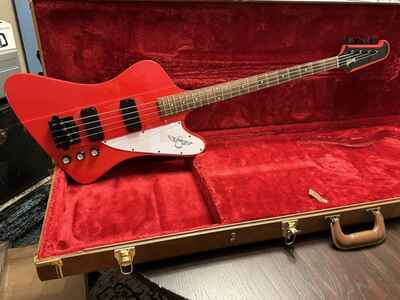
Gibson Thunderbird Bass Guitar
Easley, South Carolina, 296**, UNITED STATES OF AMERICA
$2500
... more
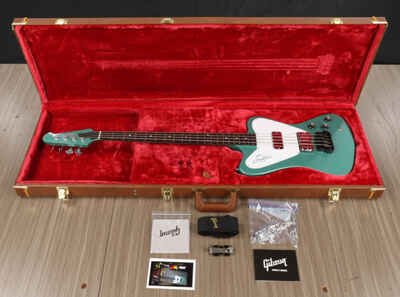
Gibson Thunderbird 4-string Solidbody Electric Bass Guitar - Inverness Green
Fort Wayne, Indiana, 468**, UNITED STATES OF AMERICA
$1500
Used Condition
4-string Electric Bass with Mahogany Body and Neck, Rosewood Fingerboard, and 2 Humbucking Pickups - Inverness Green
8 6 lbs
In good condition. There is a finish chip under the bass edge of the truss rod cover; there are dents in the bass edge of the fretboard at the 2nd and 5th frets. The electronics have been tested as good. The stock bridge has been replaced with a black Hipshot Supertone bridge and it is included inside the case along with all the pictured ... more
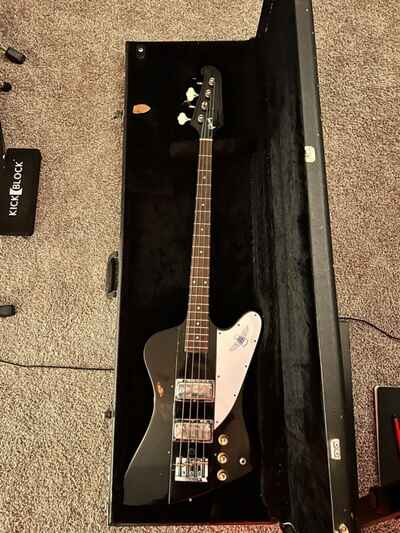
1976 Gibson Thunderbird Bicentennia Ebony
Antioch, Tennessee, 370**, UNITED STATES OF AMERICA
$4145
... more

GIBSON THUNDERBIRD NON-REVERSED BASS GUITAR
New Port Richey, Florida, 346**, UNITED STATES OF AMERICA
$1600
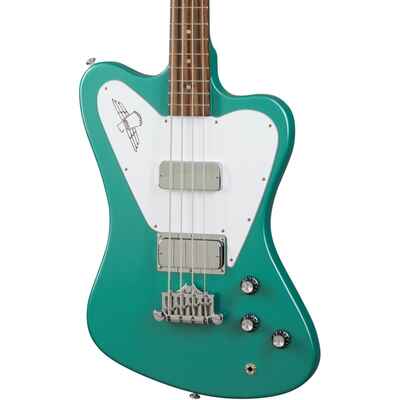
Gibson Non-Reverse Thunderbird Bass Inverness Green
Middletown, New York, 109**, UNITED STATES OF AMERICA
$2198

Epiphone Thunderbird Vintage Sunburst Solid 4-String Electric Bass Guitar w / Case
North Hollywood, California, 916**, UNITED STATES OF AMERICA
$425
We hope you enjoy the photos and information presented herein.
If you have any questions, feel free to contact us for a prompt and friendly response. --------------------------------------------------------------------------------------------------------------------------------------------
Epiphone Thunderbird Vintage Sunburst Solid 4-String Electric Bass Guitar with Hard Shell Case
Up for sale we have a ... more
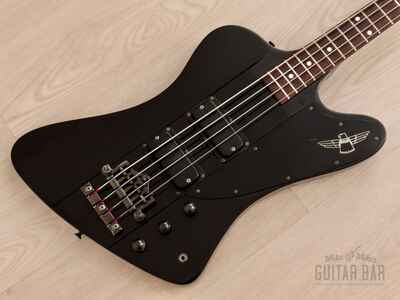
1989 Greco TB-70 Thunderbird IV Mint Collection Vintage Bass Ebony TB1100, Japan
Seattle, Washington, 981**, UNITED STATES OF AMERICA
$1250
Tonewoods include a basswood body, mahogany neck, and thick slab rosewood fretboard. As its name would ... more

Vintage Gibson Thunderbird Bass Sunburst 1979
Brookfield, Wisconsin, UNITED STATES OF AMERICA
$4999
Vintage Gibson Thunderbird Bass Sunburst 1979
PLEASE CONTACT US WITH ANY QUESTIONS OR FOR AN IN-HAND DESCRIPTION
A great playing Thunderbird in really nice shape for its age with a comfortable feel & terrific tone. Fully inspected & professionally set up by the experts here at Cream City Music, so it's ready to play straight out of the case
Cosmetic Condition: Great shape considering it's 45 years old - various minor nicks, chips, dents & dings; surface scratches ... more

Gibson USA Thunderbird Reverse Bass Natural Tobacco With Original Hard Case
Launceston, PL15***, UNITED KINGDOM
£2000
The traditional 9-ply mahogany / walnut neck through body construction provides a thundering low end response and a piano like sustain.
The narrow nut width and rounded neck profile neck feels both fast and intuitive. The Thunderbird high output, ceramic magnet loaded humbucking pickups (neck and bridge) deliver the sonic and iconic ... more
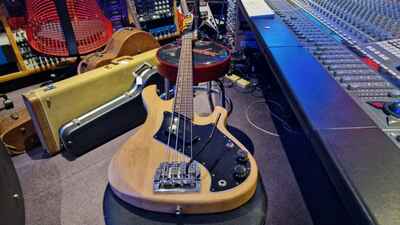
Gibson Victory Bass 1981 Vintage USA Kahler Tremolo Thunderbird Headstock
Southend-on-Sea, SS1***, UNITED KINGDOM
£1999

1989 Jackson Thunderbird Basshülle - Made in USA - passt GIBSON
COLOGNE, GERMANY
£250
+ fits also Gibson T-Bird models
+ black interior with formfit cut, some wear
+ tolex has a LOT of wear and larger rips on back and front
+ leather ends have rips
+ right latch is broken
+ worn but ROCK SOLID
... more

60er EPIPHONE von GIBSON EMBASSY DELUXE BASS - hergestellt in USA - THUNDERBIRD SOUND
COLOGNE, GERMANY
£2998
+ mahogany body finished in wine red, has lots of weather checking and wear, several extra screw holes on back
+ mahogany neck with rosewood fingerboard, LONG SCALE, has 4 minor SURFACE stress cracks below tuners=check last 3 pics
* skinny neck profile on back around first 5 frets
+ new Fender Reissue tuners
+ 1 original THUNDERBIRD pickup & 1 newer Fender Jazz bass single coil
+ new pickguard
+ new pots and ... more

60's EPIPHONE by GIBSON EMBASSY BASS USA - THUNDERBIRD SOUND - LONG SCALE
COLOGNE, GERMANY
€3333
60's Epiphone by Gibson Embassy Deluxe Bass - made in USA:
+ mahogany body finished in wine red, has lots of weather checking and wear, several extra screw holes on back
+ mahogany neck with rosewood fingerboard, LONG SCALE, has 4 minor SURFACE stress cracks below tuners=check last 3 pics
* skinny neck profile on back around first 5 frets
+ new Fender Reissue tuners
+ 1 original THUNDERBIRD pickup & 1 newer Fender Jazz bass single coil
+ new pickguard
+ new pots and ... more

1987 Gibson Bass IV - hergestellt in den USA - THUNDERBIRD TONABNEHMER
COLOGNE, GERMANY
£1090
* the black painted part of the body was cut off before by some moron and replaced with 2 pieces of ash=
check pic 5
* pearl white finish is very worn
* Thunderbird pickups
* black Schaller hardware
* ebony fingerboard, frets are fine
... more

Gibson USA Thunderbird Bass (Reverse) Bicentennial '76 Natural Finish & HSC 1976
Cowbridge, CF71***, UNITED KINGDOM
£2495
For sale, an incredibly rare, one of just 224 made in 1976, Gibson Thunderbird Bass. Reverse body, known as the Bicentennial '76 model
Back of headstock stamped:
00 214303Dating to 1976, origin Kalamazoo
Specification:Mahogany centerpieceMahogany wingsSunburst, Natural, Ebony and White finishesRosewood fretboard34 1 / 2 inch scale (actually three eighths of an inch)Chrome plated pickup covers, ... more

60er EPIPHONE von GIBSON EMBASSY DELUXE BASS - hergestellt in USA - THUNDERBIRD SOUND
COLOGNE, GERMANY
£2998
+ mahogany body finished in wine red, has lots of weather checking and wear, several extra screw holes on back
+ mahogany neck with rosewood fingerboard, LONG SCALE, has 4 minor SURFACE stress cracks below tuners=check last 3 pics
* skinny neck profile on back around first 5 frets
+ new Fender Reissue tuners
+ 1 original THUNDERBIRD pickup & 1 newer Fender Jazz bass single coil
+ new pickguard
+ new pots and ... more

1975 Greco SB-850 Suzi Quatro Thunderbird Bass (Brown Sunburst)
Mojo Stompboxes, 2***, AUSTRALIA
AU $2745
Mahogany body with a maple neck and a 20 fret bound rosewood fingerboard (34" scale length, 40mm nut width), ... more