

1975

Development starts.  We started with the "musical purpose" theory, which of course is to determine what the musical instrument is supposed to accomplish. Once the theories were developed and our "musical purpose" guidelines were established, then we went to our outside review board, which consists of many talented players throughout the United States. Many of which are the finest in the business. Their reactions to the concept and early prototypes were most favourable. From there, we went to the drawing board and began working out the various details to pull the project together in a final prototype form. At the same time I discussed the project with Dr. Bob Moog of Moog Synthesizers and between Bob, Roger Cox and our entire design team we collaborated on the design of the instrument and the internal electronics
Interview with Gibson product development director Bruce Bolen, 1978 Gibson magazine

John Entwistle is pictured on the cover of the November 1975 issue of Guitar Player magazine, wielding a 1964 Thunderbird.
I thought I might as well try it out on stage, and it was perfect, though it didn't have enough treble, and it still doesn't. Once I realized Thunderbird was the bass I was going to be playing for a few years, I panicked because they stopped making them. Thunderbird necks tend to be too thin down at the bottom. I get my fingers all tangled up when I go to the first fret.
Was the desire for a Thunderbird with more treble, and a wider neck the motivation for the RD series?
1976
At least one visitor to the Gibson factory reports seeing a single-pickup RD prototype with a Thunderbird headstock.

Spring 1976 In relation to John Entwistle's visit to the Gibson Kalamazoo plant
Later.. he signed a Moog Product Endorsement contract and made plans to visit the Gibson factory around NAMM time to discuss the "Return of the Thunderbird"
Norlin artist perspective leaflet, 2nd quarter 1976.

Late 1976 Gibson are trying to make me something similar using the same tone circuitry as the Alembic. They're getting together with Moog to work something out. They made a prototype which they were going to put Alembic electronics in, but we managed to convince them it was going to be senseless to make me twelve Gibson guitars all with Alembic stuff on. There's one thing about Alembic — it can be hard to vary the controls while you're playing because there are so many, so it would be nice if, when they did the Gibson one, they could give me some floor controls so I can either control it from the guitar or the floor.
Interview with John Entwistle, Jan 1977 issue of International Musician and Recording World.
1977

May 1977 In an interview in Guitar, Entwistle raves about his new Alembic basses "I've had another change onto the Alembics - the best change I ever did". Four and eight string examples are shown with a spiderweb design in the top corner.
The interview goes into his bass collection in some detail, but makes no mention of the RD bass, or the project in general.
June 1977 The RD series launches at the Atlanta, Georgia NAMM show (June 11th-14th), the largest NAMM show up to that date. Although, according to Guitar Player the RD series creates 'substantial talk', though greater attention focuses on 'the latest breakthrough', guitar synthesizers: 360 Systems, Hagstrom Patch 2000, Roland GS etc.

The John Entwistle RD-77 Gibson active electronics instruments are previewed at NAMM... among the prototypes... the fabled "spiderbass" that Entwistle will play himself.
Norlin artist perspective leaflet, summer 1977.
The bass Entwistle ended up with (whether it was the bass demonstrated at NAMM '77 is unclear) had a 1977 decal serial number 06196012, with the words LIMITED EDITION. It had three main differences from early production basses 1) the lack of a battery access cover on the bass reverse; 2) a larger size 'flying f-hole' headstock inlay, positioned slightly lower, but also extending down to actually touch the truss rod cover; 3) no model designation on the truss rod cover. Have a look at this bass in the excellent book covering Entwistle's collection Bass Culture

Gibsons RD series of guitars and basses, with Moog electronics, creates substantial talk because of their abilities to cross-over from the screaming sustain of rock to the mellow richness of jazz.
Review of the 1977 NAMM show, Guitar Player magazine, Sept 1977.
I am looking for pictures of the RD basses displayed at NAMM 1977. Were you there? can you help?
August 1977 Production RD basses ship with eight digit stamped serial numbers (not decals). Early examples have Schaller M4 machine, changing to open gear Schaller BM by October.
1978
January 15th 1978 The RD Artist bass appears in its first price list at $699. Listed finishes are Ebony, Natural and Fireburst.

early 1978 With the ghost of Orville Gibson looking over his shoulder... Bob Moog dips his designer's hands into the second generation Gibson active electronics guitar the Gibson RD-77... already in use by the Who's John Entwistle recording in the United Kingdom... The RD-77 shows more Moog technology blended with Gibson tradition...
Pat Aldworth previews the RD-77 to Rex bassist; Louis Van Dorn, CBS All star Steve Kahn, during their Gibson/Kalamazoo visit.
Norlin artist perspective leaflet, 1978. This leaflet contains a very interesting picture of Bob Moog at work on an RD-77; the instrument pictured clearly has a bolt-on neck! See image here
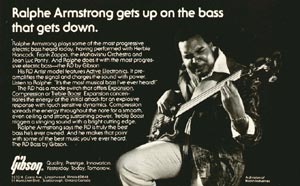
May 1978 Ralphe Armstrong features in an advertisement for the RD Artist bass. He is pictured with his Mahogany-bodied RD, with fretless ebony fingerboard.
May 15th 1978 The RD series are pictured on the cover of this price list. Prices and finishes are unchanged.
May 26th 1978 Design patent 256367 for Guitar or Similar Article filed.
The RD Artist bass has its first catalogue appearances in the 1978 Gibson catalog and 1978 RD catalog.
The RD Artist is Gibson's best-selling bass of 1978, shipping 1402 instruments, compared to 808 Grabbers, 1025 G-3s and 991 Rippers.
1979
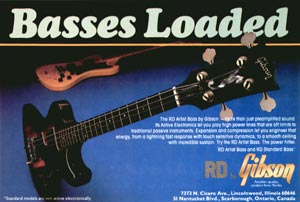 Basses loaded. RD Artist advert from Guitar Player magazine, March 1979.
January 1st 1979 The first price list of the year lists an extra finish, Antique Sunburst, for the fretted bass. It also announces the new fretless version, in Antique Sunburst and Natural finishes only. Both are priced at $749.
June 1st 1979 The second price list of 1979 doesn't change any prices, however Fireburst is dropped as a finish for the fretted model.
September 30th 1979 The fretless RD Artist is dropped from the third price list of 1979. Prices unchanged.
The switching system of RD-77 Artist basses changes from the three-way switch that allowed either bright mode or expansion/compression, to a two mini-toggle system (RD-79) that allows either of these modes individually, and perhaps most crucially allows both at the same time. The earliest RD-79 examples are typically dated December 1979. Have a closer look at the two switch configurations.
Shipping figures are almost halved on the previous year, yet the RD Artist is still Gibsons best-selling bass.
1980
1980 The final US catalogue appearance of the RD Artist bass is the 1980 Gibson catalog
January 7th 1980 The RD Artist bass price is raised to $899.
July 1st 1980 Price unchanged. This is the last appearance in a price-list before the models deletion.
August 12th 1980 Design patent 256367 for Guitar or Similar Article granted.
1981
The RD Artist bass is withdrawn in 1981. The price list of April 1st '81 has no mention of any RD guitars or basses.
March 1981 A small number (perhaps 100) CMT (curly maple top) RD Artist basses are produced in March/April.
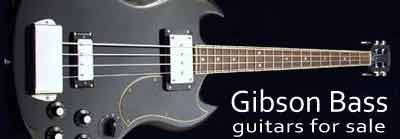
Gibson RD bass guitars for sale
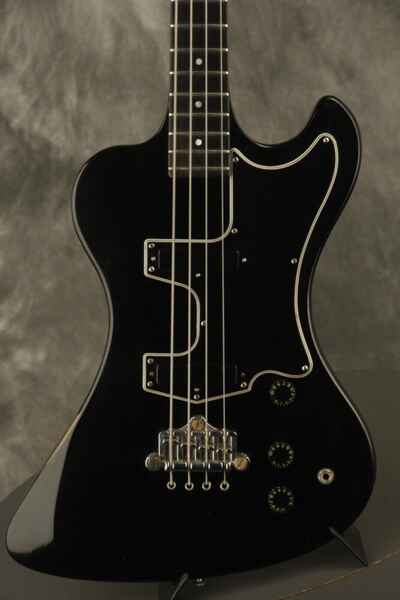
1977 Gibson RD Standard BASS Black
Carbondale, Illinois, 629**, UNITED STATES OF AMERICA
$3590
Add Me to Your Favorite Sellers
Olivia's Vintage would like to present this 1977 Gibson RD Artist Standard Bass in its original Black finish. It has a great playing neck with great frets. It's all original and 100% complete along with the original hardshell case (missing handle and some damaged on the sides of the case). This RD Bass looks great with some nicks + dings (some are touched-up) and other cosmetic wear. The bass itself remains structurally sound with no cracks, breaks or ... more

I own a 77 Gibson RD Artist, with a born on date of Nov, 23rd, 1977, It was the 121st guitar off the line, in Kalamazoo, MI. In this article, it states that their were 1402 RD Artist's shipped in 1978. I am curious if their is a quantity number for the year of 1977? Does anyone have this information?
Yes, the shipping figures (up to and including 1979) are available here http://www.flyguitars.com/gibson/bass/RDShippingFigures.php
Hi there, i owe an RD Artist Bass Body plus neck. Once tried to rebuild for lefthand, than build back to right hand usw. One big piece of body was exchanged against another piece of wood ... no perfect work, of possible at all. Original finish: sunburst; finished on body grinded. No hardware left, no electronics, only mountain pieces for bridge are left over. Neck in very good condition; frets mint. Series no. 70529080 If anybody owes hardware or is interested to buy this antiquity please contact me.