

neck:
One piece mahogany neck, unbound rosewood fretboard, dot position markers, 20 frets. Width at nut 1 3/4"
One piece mahogany neck, unbound rosewood fretboard, dot position markers, 20 frets. Width at nut 1 3/4"
heel:  Used on all set-necked solid-body basses until early 1966
Used on all set-necked solid-body basses until early 1966body:  One piece mahogany, wide spaced controls, large control cavity, type 1* cutaways. Cherry finish
One piece mahogany, wide spaced controls, large control cavity, type 1* cutaways. Cherry finishheadstock:  Pearl inlaid crown logo situated above the headstock centre
Pearl inlaid crown logo situated above the headstock centrepickups:  Silvered black plastic covered neck humbucker. Silvered mounting ring on bridge pickup Series 1 circuitry
Silvered black plastic covered neck humbucker. Silvered mounting ring on bridge pickup Series 1 circuitryhardware:  Nickel type 1 bar bridge, mute, Kluson 538 machine heads and handrest. Ebony finger rest. Front mounted output jack.
Nickel type 1 bar bridge, mute, Kluson 538 machine heads and handrest. Ebony finger rest. Front mounted output jack.

neck: By 1964 width at nut had reduced to 1 11/16"

hardware: Now chrome plated throughout. Bridge updated to the type 2 bar bridge. Machineheads were usually Kluson 538s, as before, though some examples were fitted with Japanese closed gear tuners towards the end of the year and possibly beyond

pickups: The surround of the bridge pickup was no longer silvered; just plain black plastic
1967

hardware: By early 1967, Gibson were fitting witch-hat knobs to their EB basses. Also, the bar bridge was replaced by the 2 point tune-o-matic bridge. The mute remained the same despite the different bridge
body: Walnut & Cherry finishes available
hardware: At some point in early 1969, the handrest was phased out in favour of a chrome bridge cover
hardware: At some point in early 1969, the handrest was phased out in favour of a chrome bridge cover


heel: '69 saw significant remodelling of the neck joint style. The flat sloped heel in use since 1966 was still in evidence at the start of the year, but was soon replaced by a large rounded heel; flush with the body at first, and later stepped, finally reducing in size (bottom), until the slotted headstock basses were introduced at the very end of the year
body: type 2* cutaways
headstock: Some late 1969 headstocks have a glued-on pearl logo, but still with an inlaid crown
hardware: Although Kluson 538s were still in use, numerous EB3s were fitted with Schaller M-4 keys with 'G' on the gear cover
1970
1970 bass catalog


heel: Typical slotted headstock neck joint
body: One piece mahogany, narrow spaced controls type 2* changing to type 3* cutaways. Long scale examples have the same body, with the bridge positioned further back on the body
headstock: Slotted headstock, glued-on pearl logo, without dotted i
pickups: The neck humbucker now has a black plastic surround to mount it to the body, and four height adjustment screws through the pickup cover. Series 1 circuitry
hardware: The new slotted headstock required Schaller M-4-C tuners. Other changes were a new pickguard with no finger rest, and a new scripted truss rod cover
body: 25 EB3s shipped in natural finish
hardware: Towards the end of slotted headstock production, underbridge mutes were phased out - often in favour of a piece of foam glued to the underside of the bridge cover
hardware: Towards the end of slotted headstock production, underbridge mutes were phased out - often in favour of a piece of foam glued to the underside of the bridge cover
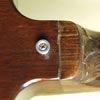


heel: Post split-headstock seventies neck joint
body: One piece mahogany, narrow spaced controls, small control cavity, type 4*, quickly changing to changing to type 5* cutaways
headstock: Solid headstock, silk-screened logo
pickups: The same pickups as 1970-71 EB3, however repositioned away from the neck, and with series 2 circuitry
body: In 1972 the EB3 was redesigned again; hardware changes consisted of an entirely new shape pickguard, entirely new Schaller M-4-S tuners and unscripted truss rod cover. The two point bridge (now with metal saddles) was still used into 1973
1973
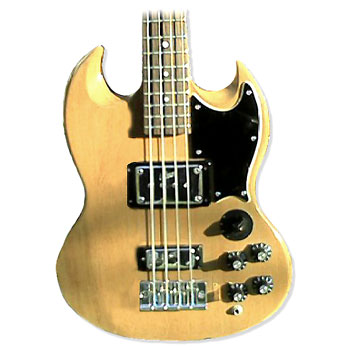
hardware: At some point in 1973 the two point bridge was replaced by the three point bridge, and the older Schaller tuners were replaced with Schaller B-M tuners
1974
1976

hardware: At some point in the mid seventies the older Schaller tuners were replaced with Schaller B-M tuners
1977
* Gibson EB basses had subtly different cutouts small changes in the bevels as opposed to the actual size of the horns - there is no obvious way to name these differences, and no reference to them in any Gibson literature, so they have been described here simply as types 1-5. For a comparative look at the variations, see the EB bass cutaway page
Gibson EB3 bass for sale
Flyguitars.com is funded by its visitors. When you buy through links on our site we may earn an affiliate commission. For more info see terms and conditions.

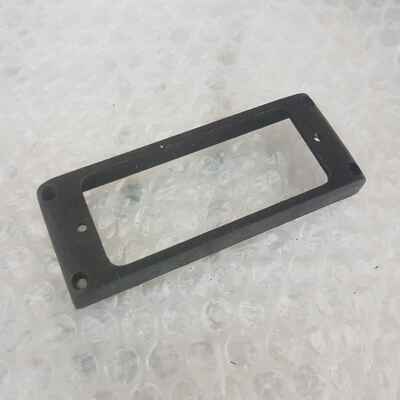
GIBSON 1966 BASS CHROME PICKUP COVER LARGE HUMBUCKER EB-O EB-2 EB-3 EPI RIVOLI
Berlin, New Hampshire, 035**, UNITED STATES OF AMERICA
$59
FREE USA SHIPPING!
There's nothing worse than not having a cover for that big Gibson bass humbucker. It's one butt-ugly pickup without it! This is correct for late 1965 thru 1970 EB-O, EB-2 and EB-3 models as well as 1969 & 1970 EB-1 basses. It will also fit Epiphone Rivoli basses. This version has the small-head mounting screws (4 are included but just not shown). Gibson changed the height and the position of this cover in 1970 and enlarged the mounting screw holes. It's in great shape ... more
There's nothing worse than not having a cover for that big Gibson bass humbucker. It's one butt-ugly pickup without it! This is correct for late 1965 thru 1970 EB-O, EB-2 and EB-3 models as well as 1969 & 1970 EB-1 basses. It will also fit Epiphone Rivoli basses. This version has the small-head mounting screws (4 are included but just not shown). Gibson changed the height and the position of this cover in 1970 and enlarged the mounting screw holes. It's in great shape ... more

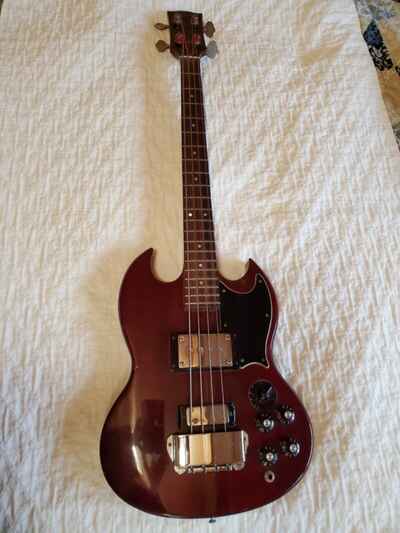
Gibson EB3 Bass Vintage
Edmonton, Kentucky, 421**, UNITED STATES OF AMERICA
$1990
This is a beautiful bass that sounds and plays great. Cherry finish 600xxx . I bought it used in the mid 90's from a gentleman who purchased it new from the Gibson Factory Nashville in the early 70's. It had a blemish on the finish and he bought it as a second. It comes with the original Gibson hard case. There is no structural damage or repairs If you pick it up rather than having it shipped I will throw in a Ampeg amp. Ampeg B100R. This a like new excellent condition amp that would sell for ... more

Vintage Gibson EB3 Bass Guitar
Upper Sandusky, Ohio, 433**, UNITED STATES OF AMERICA
$2477
For your consideration we are offering this early 70??s era Gibson EB3 Bass Guitar . We believe that the guitar is stock without alterations yet the case is obviously handmade and does a good job protecting the instrument. Plays Great / Sounds Great Instruments. Thanks for your viewing time today and good luck to our bidding community.
... more
... more

1972 Gibson eb3 Bass Project, body husk, pickups and bridge parts squash yellow
Callicoon, New York, 127**, UNITED STATES OF AMERICA
$800
1972 EB3 Bass guitar project. Took it in trade, but realize im not going to ever finish it. The serial number was never painted over. What you get is the body husk, two pickups, and original bridge. It's been painted in a squash yellow. Will still need a finish sanding. No controls, no tuners. No bridge height screws, although the ferrils are seated in the body already. Will need 1 more bridge saddle, and two more adjustable saddle screws. A very cool project. I already have too many projects ... more

"1973" Vintage Cherry "GIBSON EB-3" with OHSC Serial #056076 in Great Condition
Riverside, California, 925**, UNITED STATES OF AMERICA
$3795
Here we a have a Pre-Owned Excellent Condition 1973 VINTAGE GIBSON EB-3 BASS. I Just put it through the Shop to make sure everything is up to snuff. I am very meticulous when it comes to my gear, I baby my stuff. Everything is in perfect working order. I just had it completely set up with brand New FENDER FLATOUND 45-100'S so it plays wonderful. Truss Rod is in good working condition Neck is Straight action is perfect. (I like the action low) so it set perfect and plays like a dream. All the ... more
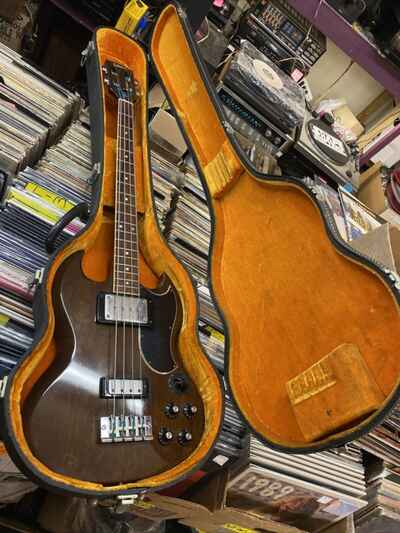
Gibson EB-3 Cherry Mod 1969 Electric Bass Guitar Original Case Slotted Head Art
El Segundo, California, 902**, UNITED STATES OF AMERICA
$3500
Beautiful stunning EB three Gibson guitar Bass original case, one lady owner, left as found 1970s i??ll let the Pictures do the talking or the playing ! Enjoy laurence & sally of StorageWars and baggage battles currently www roundthebend tv
... more
... more
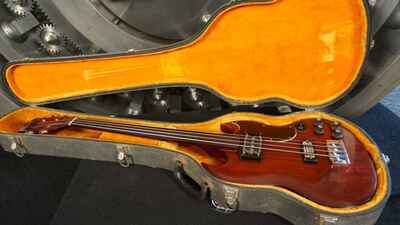
Gibson Slothead EB-3 1971 - Cherry Fretless Bass w / Original Gibson Case
Huntington, Indiana, 467**, UNITED STATES OF AMERICA
$1500
For sale is a Gibson Slothead EB-3 1971 - Cherry Fretless Bass w / Original Gibson Case in Good Condition!
This bass is an absolute monster and sounds incredible! I don't know for sure (I kinda doubt it) that this would have come from the Gibson factory as fretless. However, whoever did the job has done it professionally and it looks great!
The electronics work perfectly and it has that classic "double bass" tone in the first position!
There is some bow in the neck. The truss doesn't ... more
This bass is an absolute monster and sounds incredible! I don't know for sure (I kinda doubt it) that this would have come from the Gibson factory as fretless. However, whoever did the job has done it professionally and it looks great!
The electronics work perfectly and it has that classic "double bass" tone in the first position!
There is some bow in the neck. The truss doesn't ... more

Used Gibson 1970 EB-3 Slotted Headstock Short Scale SG Bass w / Case
Weymouth, Massachusetts, 021**, UNITED STATES OF AMERICA
$2599
Very good example of an EB-3 with a slotted headstock (only made for a few years). Everything is original with no modifications. The body has a crack going all the way through by the control cavity, but it is stable with no movement. We are uncertain if the chipboard case is original -- there is no logo. Everything functions perfectly with no "dirty pot" noise on the switch or potentiometers. 7lbs , 14oz. 30 5" scale length. Feel free to contact us with any questions or concerns . ... more

Epiphone EB3 Bass Bassgitarre Gibson SG Style aktiv Hipshot
Ilmenau, 98***, GERMANY
€290
Verkaufe einen top gepflegten Epiphone EB3 Bass.
Mahagoni-Body mit eingeleimtem Mahagonihals.
Sidewinder-Humbucker Hals-Pickup, Mini-Humbucker Bridge-Pickup.
Der Bass ist modifiziert mit einer Hipshot Supertone Brücke sowie einer 3Band-Aktivelektronik von Yamaha. Beide Modifikationen eröffnen klanglich und technisch völlig neue Möglichkeiten, kein Vergleich zum Originalzustand!
Besichtigung, Antesten, Abholung, Versand sowie Barzahlung, Überweisung oder PayPal-Zahlung sind ... more
Mahagoni-Body mit eingeleimtem Mahagonihals.
Sidewinder-Humbucker Hals-Pickup, Mini-Humbucker Bridge-Pickup.
Der Bass ist modifiziert mit einer Hipshot Supertone Brücke sowie einer 3Band-Aktivelektronik von Yamaha. Beide Modifikationen eröffnen klanglich und technisch völlig neue Möglichkeiten, kein Vergleich zum Originalzustand!
Besichtigung, Antesten, Abholung, Versand sowie Barzahlung, Überweisung oder PayPal-Zahlung sind ... more

1971 Gibson EB 3 SLOTTED HEADSTOCK BASS CASE - Made in USA
COLOGNE, GERMANY
£345
1971 GIBSON EB 3 SLOTTED HEADSTOCK BASS CASE - made in USA :
* CASE ONLY !
* interior has stains
* tolex has rips
* all latches are working fine
* worn but solid
* check all pics
... more
* CASE ONLY !
* interior has stains
* tolex has rips
* all latches are working fine
* worn but solid
* check all pics
... more

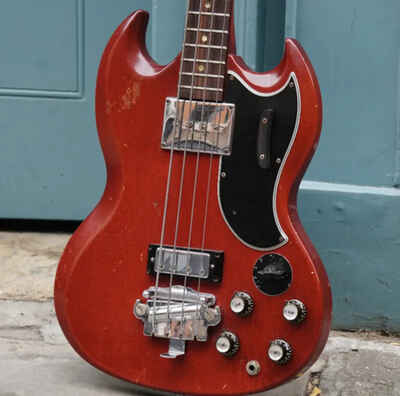
Gibson EB-3 1965 - Cherry Red JACK BRUCE CREAM
Doncaster, DN6***, UNITED KINGDOM
£5499
FINESTSELECTIONSHIPPINGSPECIALISTS24 HourSupportLondon Vintage Guitars are please to offer:Gibson EB-3 1965 - Cherry RedThe classic Cream bass, as used by Jack Bruce on all albums and tours of the legendary psychedelic blues band (his was 1966)
Internally / Externally Original
Mahogany body / rosewood fretboard
Humbucking pickup in the neck and mini-humbucker in the bridge
Four-way rotary pickup selector switch
Condition 8 / 10
Case
ALL ... more
Internally / Externally Original
Mahogany body / rosewood fretboard
Humbucking pickup in the neck and mini-humbucker in the bridge
Four-way rotary pickup selector switch
Condition 8 / 10
Case
ALL ... more

1971 Gibson EB 3 HÜLLE - passt NUR SCHLITZKOPF Version
COLOGNE, GERMANY
£399
1971 GIBSON EB 3 SLOTTED HEADSTOCK BASS CASE - made in USA :
* CASE ONLY !
* strap that holds case open=GONE
* bottom and top are loose =need reglueing
* tolex has rips
* all latches are working fine
* check all pics
* SOLD AS IS - NO RETURNS... more
* CASE ONLY !
* strap that holds case open=GONE
* bottom and top are loose =need reglueing
* tolex has rips
* all latches are working fine
* check all pics
* SOLD AS IS - NO RETURNS... more

1971 GIBSON EB 3 SLOTTED HEADSTOCK BASS CASE - made in USA
COLOGNE, GERMANY
€399
1971 GIBSON EB 3 SLOTTED HEADSTOCK BASS CASE - made in USA :
* CASE ONLY !
* interior has stains
* tolex has rips
* all latches are working fine
* worn but solid
* check all pics
PLENTY of PARTS for SALE
ATTENTION! OVER 1000 more
GUITARS-BASSES-AMPS-PARTS
in our OTHER AUCTIONS !!!
CHECK OUR SHOP OUT -------------->>>>>-------------->>>>>
... more
* CASE ONLY !
* interior has stains
* tolex has rips
* all latches are working fine
* worn but solid
* check all pics
PLENTY of PARTS for SALE
ATTENTION! OVER 1000 more
GUITARS-BASSES-AMPS-PARTS
in our OTHER AUCTIONS !!!
CHECK OUR SHOP OUT -------------->>>>>-------------->>>>>
... more
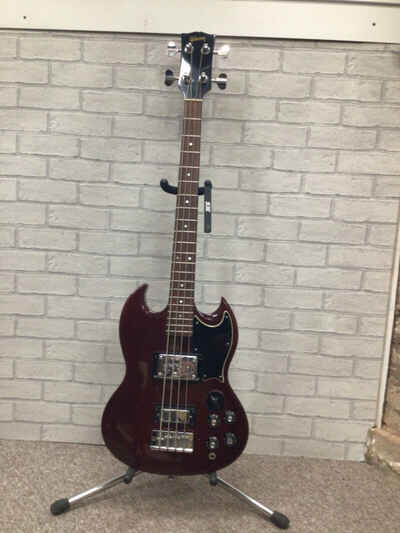
Gibson EB-3 Bass Guitar 1967
Horncastle, LN9***, UNITED KINGDOM
£2950
The Gibson EB-3 is a bass guitar introduced in 1961 and discontinued in 1979. It was produced at Gibson's plant in Kalamazoo, MI It features a slim SG-style body, a short 30 5" scale, and two pick up's (a large humbucking pickup in the neck position and a mini humbucker pickup in the bridge position). The electronics include a four-way rotary pickup selector switch (for Series 1 basses: neck pickup with midrange notch, bridge, bridge and neck with low end rolled off neck pickup, neck pickup with... more


1971 GIBSON EB 3 SLOTTED HEADSTOCK BASS CASE - made in USA
COLOGNE, GERMANY
€444
1971 GIBSON EB 3 SLOTTED HEADSTOCK BASS CASE - made in USA :
* CASE ONLY !
* strap that holds case open=GONE
* bottom and top are loose =need reglueing
* tolex has rips
* all latches are working fine
* check all pics
Over 1000 more
GUITARS-BASSES-PARTS in our OTHER
AUCTIONS !!!!
TAKE A LOOK !!!... more
* CASE ONLY !
* strap that holds case open=GONE
* bottom and top are loose =need reglueing
* tolex has rips
* all latches are working fine
* check all pics
Over 1000 more
GUITARS-BASSES-PARTS in our OTHER
AUCTIONS !!!!
TAKE A LOOK !!!... more

1963 Gibson EB-3 Bass ex Bob Daisley (Rainbow, Black Sabbath)
Doncaster, DN6***, UNITED KINGDOM
£7999
The Blizzard of Oz Collection
We are happy to offer the following from the personal Private Collection of The Blizzard Himself that Being Bob Daisley whom is Heavy Rocks most distinguished and respected of all Bass Players and Songwriters, details as follows
History
The history and career of Bob Daisley is Legendary and has been one of the main contributors to the sound, look, style of the following Iconic Hard Rock artists some of which are as follows:
Rainbow - Black Sabbath - ... more
We are happy to offer the following from the personal Private Collection of The Blizzard Himself that Being Bob Daisley whom is Heavy Rocks most distinguished and respected of all Bass Players and Songwriters, details as follows
History
The history and career of Bob Daisley is Legendary and has been one of the main contributors to the sound, look, style of the following Iconic Hard Rock artists some of which are as follows:
Rainbow - Black Sabbath - ... more

Gibson EB-3L 1973 - Vintage Bass Guitar, Long Scale - Original Hard Case - Rare!
Meadow Heights, VIC, 3***, AUSTRALIA
AU $4895
Vintage Gibson EB-3L
Long Scale 1973 model bass guitar with original hard case
All pictures supplied with the auction are of the actual item for sale, and indicate its condition
This vintage Gibson is in good playable condition with a clean fingerboard and neck, good fretting and fully functional tuners. This model is fitted with a drop-D tuner (adjustable) which functions well. The pickups and wiring appear original, are operational, and it sounds superb. It has been fitted with a set... more
Long Scale 1973 model bass guitar with original hard case
All pictures supplied with the auction are of the actual item for sale, and indicate its condition
This vintage Gibson is in good playable condition with a clean fingerboard and neck, good fretting and fully functional tuners. This model is fitted with a drop-D tuner (adjustable) which functions well. The pickups and wiring appear original, are operational, and it sounds superb. It has been fitted with a set... more
There are 1 comments on this article so far. Add your comment
Ron Neely Comment left 29th January 2019 18:06:24 reply
I just received a 1965 EB3 yesterday (pot code 1376529) that has the pearl crown above the center. Everything else corresponds with the standard '65 (small control spacing, chrome hardware, correct neck joint).
I just received a 1965 EB3 yesterday (pot code 1376529) that has the pearl crown above the center. Everything else corresponds with the standard '65 (small control spacing, chrome hardware, correct neck joint).